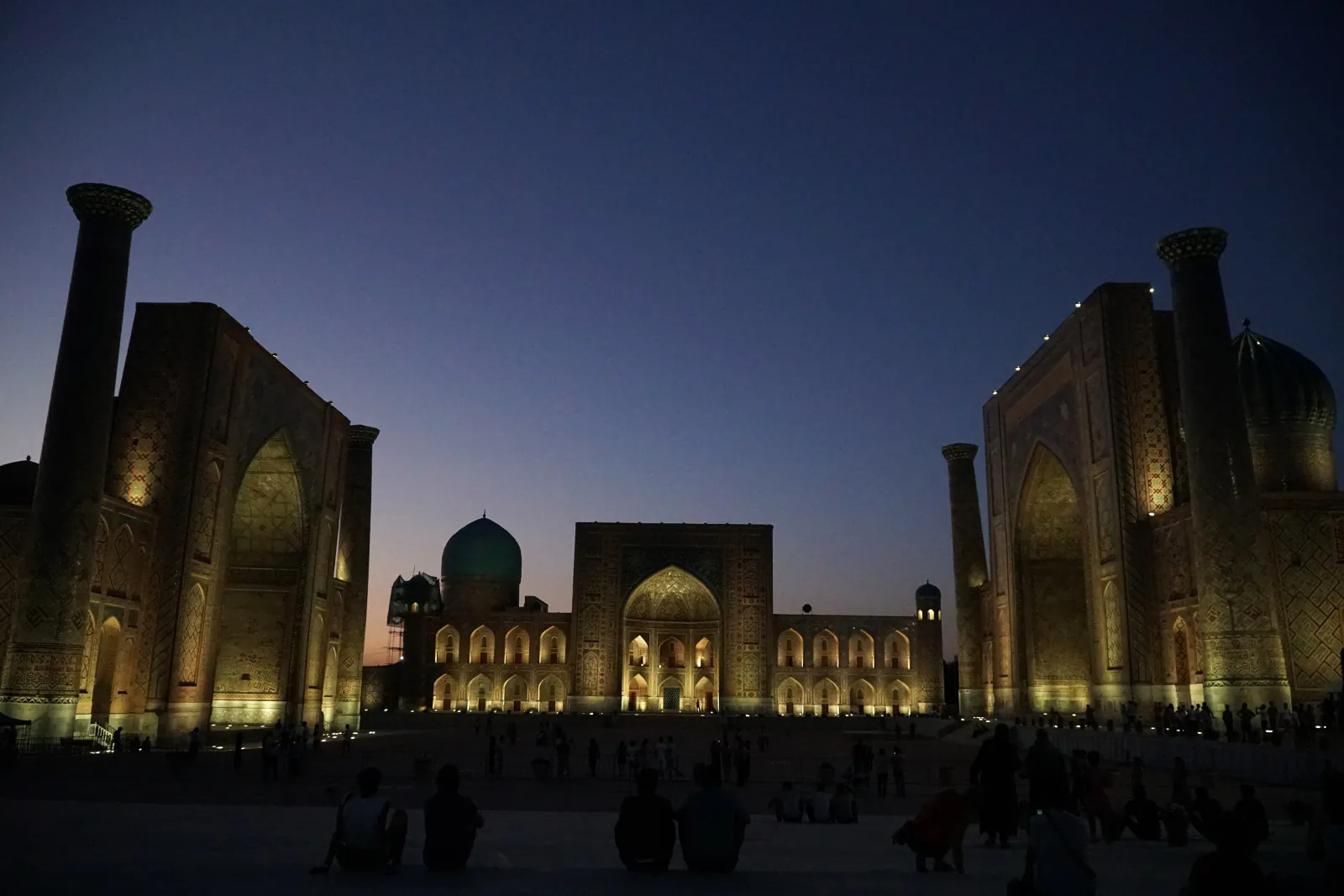
The last hour before sleep: screens, light and a mind that won’t settle
Blue light gets the blame, but the research tells a more interesting story. What really keeps us awake — and an old, simple way to close the day.
It is ten past eleven. You have prayed Isha, the house is quiet, and you lie down meaning to sleep. You just want to check one thing first. Forty minutes later you are watching a stranger repair a bicycle, and you could not say how you got there.
The next morning the Fajr alarm feels cruel, and the usual explanation is the blue light from the screen. That explanation is not wrong. But it is only a small part of the story — and the larger part is something you can actually change tonight.
The famous experiment
The idea that screens ruin sleep owes a lot to one study. At Brigham and Women’s Hospital in Boston, Anne-Marie Chang, Charles Czeisler and colleagues asked twelve young adults to read for four hours before bed, five nights in a row — once on an iPad and once from printed books. The results appeared in PNAS in 2015.
After reading on the tablet, people took about ten minutes longer to fall asleep. Their bodies released less melatonin — the hormone that rises in darkness and tells the body it is night. Their internal clock shifted later, they had less dreaming sleep, and they felt sleepier the next morning, even after the same eight hours in bed.
Then the story got more complicated
That study was real and careful, but it was also extreme: four hours of tablet reading, every night, in an otherwise dimly lit laboratory. Most of us do not do that. When researchers began to test ordinary phone use, the effect of the light itself often turned out to be small.
In 2021, Kara Duraccio and colleagues at Brigham Young University tested Apple’s Night Shift, the setting that warms the screen’s colours in the evening. 167 students spent the hour before bed for a week in one of three ways: phone with Night Shift, phone without it, or no phone at all. Overall, sleep did not differ between the groups. Among students who were already sleeping about seven hours, those with no phone slept best — and the warmer screen made no difference.
In other words, the warmer colour did not rescue sleep. Something else about the phone mattered more.
The real thief: a mind that won’t settle
In 2015, Lauren Hale and Stanley Guan reviewed 67 studies of screens and sleep in children and teenagers. In about nine out of ten, more screen time went with later bedtimes and shorter sleep. They pointed to three likely reasons, and light was only one of them.
- Time. An hour on the phone is often simply an hour not asleep. The screen does not have to change your brain to cost you sleep; it only has to be more interesting than your pillow.
- Arousal. News, arguments, messages and games wake up the mind and the body. A heart that is racing a little does not fall asleep easily.
- Light. Bright light in the evening can delay melatonin and the body clock — real, but usually the smallest of the three.
The phone is also designed never to finish. A book has a last page; a feed does not. Every video leads to the next, every message invites a reply. The mind is left with doors half-open — and a mind with open doors does not settle.

Close the doors on paper
One small experiment shows how much those open doors matter. In 2018, Michael Scullin and colleagues at Baylor University asked 57 young adults to write for five minutes before sleeping in a lab. Half wrote a to-do list for the coming days; half wrote about tasks they had already finished. The to-do group fell asleep about nine minutes faster — and the more specific their lists, the faster they fell asleep.
The likely reason is simple: once a worry is written down, the mind no longer has to hold it. You are not solving tomorrow tonight. You are telling your mind where tomorrow is kept.
An old shape for the last hour
Islam gave the end of the day a shape long before sleep laboratories existed. The Qur’an does not treat sleep as wasted time, but as one of the signs of Allah.
وَمِنْ ءَايَـٰتِهِۦ مَنَامُكُم بِٱلَّيْلِ وَٱلنَّهَارِ وَٱبْتِغَآؤُكُم مِّن فَضْلِهِۦٓ ۚ إِنَّ فِى ذَٰلِكَ لَـَٔايَـٰتٍ لِّقَوْمٍ يَسْمَعُونَ
“And among His signs is your sleep by night and by day, and your seeking of His bounty. Indeed, in that are signs for a people who listen.” (translation of the meaning)
Qur’an 30:23
The Prophet ﷺ disliked sleeping before Isha and idle talk after it, as Abu Barza reported (Sahih al-Bukhari 568). Scholars explain that this is about empty chatter, not necessary or beneficial conversation. Still, the direction is clear: after the last prayer of the day, the day is meant to wind down, not open up again.
And for the very last moments, there is a well-known instruction the Prophet ﷺ gave to al-Bara’ ibn Azib:
“When you go to your bed, perform wudu as you do for prayer, then lie down on your right side and say: O Allah, I submit myself to You, I entrust my affairs to You, and I rely on You… And make these your last words.” (translation of the meaning)
— Sahih al-Bukhari 247
Look at it with a sleep researcher’s eyes and it is remarkable. Wudu is a pause and a change of state. The right side is a fixed, familiar position. The words hand over every open door — affairs, worries, the unfinished day — to Allah. And “make these your last words” is the opposite of a feed: a clear ending. These are acts of worship first; they are not a sleep technique. But they give the mind exactly what it needs to let go.
A simple evening, in five steps
- Pray Isha, and let it mark the end. Decide that after it, nothing new begins: no new series, no new argument, no new thread.
- Pick a “last screen” time — say, thirty minutes before sleep — and keep it. If you must use the phone, turn the brightness down, but do not expect a warm screen to do the work for you.
- Spend five minutes on paper. Write tomorrow’s to-do list, as specific as you can. Then close the notebook.
- Choose something that ends. A few pages of a paper book, a portion of the Qur’an, or quiet dhikr. If you count dhikr on your phone, keep the screen dark — Safa’s counter has a mode that turns it almost black.
- Wudu, the right side, and the evening words. Let the dua be the last thing you say.
Blue light is easy to blame because it is out there, in the device. The harder and more hopeful truth is that most of what keeps us up is in here — an unfinished day. Give it an ending, and Fajr stops being a fight with the night before.
Sources
- Chang, Aeschbach, Duffy & Czeisler, 2015 — Evening use of light-emitting eReaders negatively affects sleep, circadian timing, and next-morning alertness, PNAS
- Duraccio et al., 2021 — Does iPhone Night Shift mitigate negative effects of smartphone use on sleep outcomes in emerging adults?, Sleep Health
- Hale & Guan, 2015 — Screen time and sleep among school-aged children and adolescents: a systematic literature review, Sleep Medicine Reviews
- Scullin et al., 2018 — The effects of bedtime writing on difficulty falling asleep, Journal of Experimental Psychology: General
- Qur’an 30:23 — quran.com
- Sahih al-Bukhari 247 — sunnah.com; Sahih al-Bukhari 568 — sunnah.com
- Photos: cover, Registan in the evening — Adam Harangozó, Wikimedia Commons, CC BY-SA 4.0; starry sky — Korney Violin, Wikimedia Commons, CC0; crescent moon — W.carter, Wikimedia Commons, CC BY-SA 4.0.
More to read


