
The last third of the night: tahajjud and the quiet before Fajr
A historian’s discovery about “first sleep”, the hour the Prophet ﷺ described, and a gentle way to begin with just two rak‘ahs.
Three in the morning in an old Samarkand mahalla. The dogs have gone quiet, the traffic on the big road has stopped, the neighbour’s television went dark hours ago. It is the one time of day when nobody wants anything from you.
For most of history, it seems, people knew this hour better than we do. And the Islamic tradition gives it a particular honour: the last third of the night, the quiet before Fajr. This article is about that hour — what a historian found about how people once slept, what the Prophet ﷺ said about it, and how someone could gently begin to meet it.
“First sleep” and “second sleep”
In the 1990s the American historian A. Roger Ekirch, of Virginia Tech, was reading old diaries, letters, court records and medical books from pre-industrial Europe. Again and again he met two phrases: first sleep and second sleep. People went to bed not long after dark, slept for a few hours, woke for an hour or so, and then slept again until morning.
In that waking interval, the sources say, people did quiet things: tended the fire, talked softly, reflected on their dreams — and prayed. Ekirch published his findings in 2001 in the American Historical Review and later in the book At Day’s Close (2005). He argued that artificial light, especially in the 19th century, gradually pushed bedtimes later and squeezed the two sleeps into one.
A laboratory experiment seemed to echo him. In 1992 the psychiatrist Thomas Wehr at the US National Institute of Mental Health kept healthy volunteers in darkness for fourteen hours every night for several weeks. Their sleep gradually split into two parts, with one to three hours of quiet wakefulness in between.
But this is a debate, not a settled fact. In 2015 a team led by Gandhi Yetish recorded the sleep of three societies without electricity — the Hadza in Tanzania, the San in Namibia and the Tsimané in Bolivia — and found no regular split sleep. In 2023 the historian Niall Boyce, writing in Medical History, questioned whether the old texts really describe it as widely as claimed. So the most careful reading is this: split sleep probably happened in some places, in some seasons, under long dark nights. It is history, not a prescription — and nothing here is medical advice.
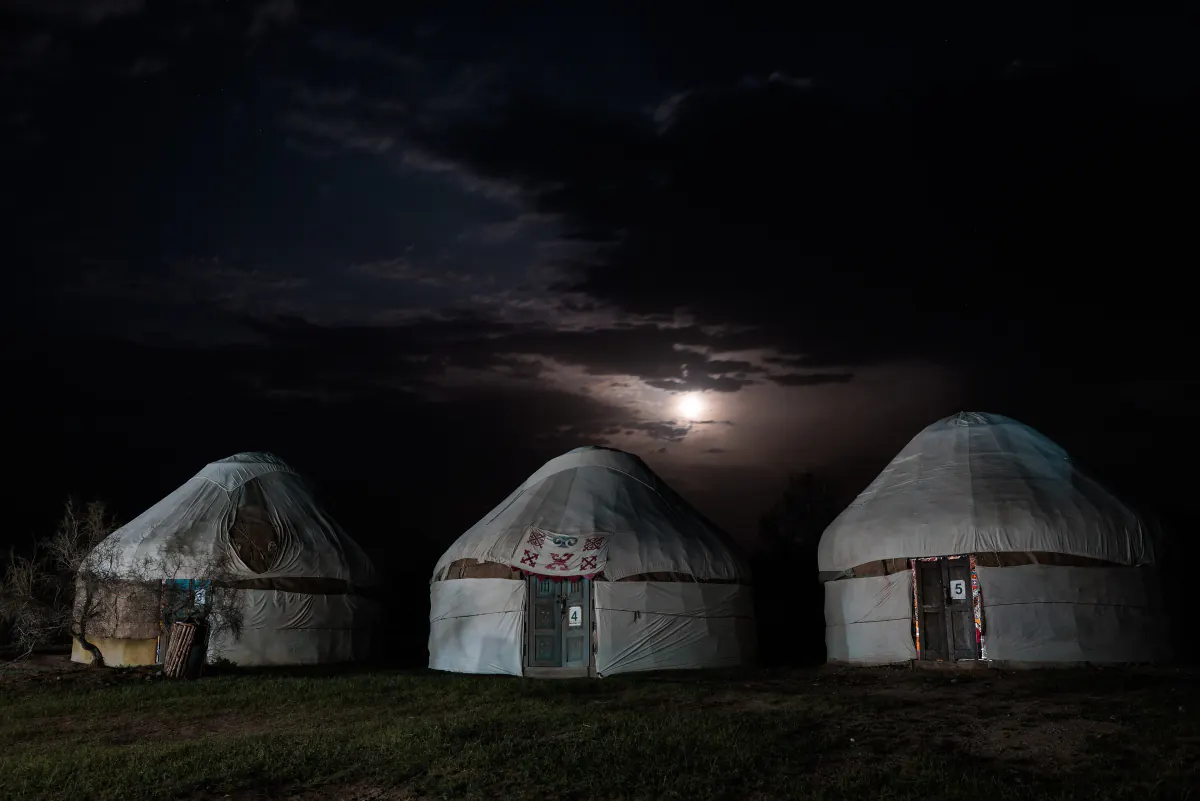
The hour the tradition points to
Whatever people in Europe did with their nights, Muslims have long had their own reason to wake in the dark. It comes from one of the most beloved hadiths about the night:
“Our Lord, Blessed and Exalted, descends every night to the lowest heaven when the last third of the night remains, and says: Who is calling upon Me, that I may answer him? Who is asking of Me, that I may give him? Who is seeking My forgiveness, that I may forgive him?” (translation of the meaning)
— Sahih al-Bukhari 1145; Sahih Muslim 758, narrated by Abu Hurayra
The Qur’an speaks of the night prayer too. Surah al-Muzzammil (73) opens by calling the Prophet ﷺ to stand in prayer for part of the night, and then says:
إِنَّ نَاشِئَةَ ٱلَّيْلِ هِىَ أَشَدُّ وَطْـًٔا وَأَقْوَمُ قِيلًا
“Indeed, rising by night is firmer in its effect and more fitting for words.” (translation of the meaning)
Qur’an 73:6
وَمِنَ ٱلَّيْلِ فَتَهَجَّدْ بِهِۦ نَافِلَةً لَّكَ عَسَىٰٓ أَن يَبْعَثَكَ رَبُّكَ مَقَامًا مَّحْمُودًا
“And in part of the night, pray tahajjud with it as something extra for you; it may be that your Lord will raise you to a praised station.” (translation of the meaning)
Qur’an 17:79
The word the verse uses, nafilah, means something extra — voluntary. Tahajjud is not one of the five obligatory prayers, and nobody is blamed for not praying it. Scholars usually describe it as prayer offered at night after having slept for a while.
When does the last third begin? Counting the night, as many scholars do, from Maghrib to Fajr: in Tashkent on 22 September, Maghrib was at 18:25 and Fajr at 04:51, so the night was about 10 hours 26 minutes long and its last third began at around 01:20. In summer it starts later and is shorter; in winter it starts earlier. Either way, it runs right up to Fajr.
Starting with two rak‘ahs
That last sentence is the key for a beginner. You do not need to wake at 01:20. The minutes just before Fajr are still inside the last third. So the gentlest way in is to set your usual Fajr alarm a little earlier — fifteen or twenty minutes — and use that small window.
- Set the Fajr alarm 15–20 minutes earlier than usual. In Safa, the Fajr alarm can simply be moved earlier than the Fajr time.
- Make wudu slowly. There is no rush; you have time.
- Pray two short rak‘ahs. The short surahs you already know are enough.
- Sit for a few minutes and ask — for yourself, your parents, anyone you love. The hadith above is an invitation to ask.
- When Fajr comes in, pray its sunnah and fard as usual.
One practical question often comes up: how does this fit with witr? In the Hanafi school witr is a necessary (wajib) prayer that can be prayed after Isha or later in the night, and the schools differ on the details. If you are unsure, ask the imam of your mosque — that is exactly what he is there for.
Remember the other hadith about small deeds: the most beloved to Allah are the most constant, even if they are small (Sahih al-Bukhari 6464). Two rak‘ahs once a week, kept for a year, is a real practice. A burst of long nights that ends in exhaustion is not.
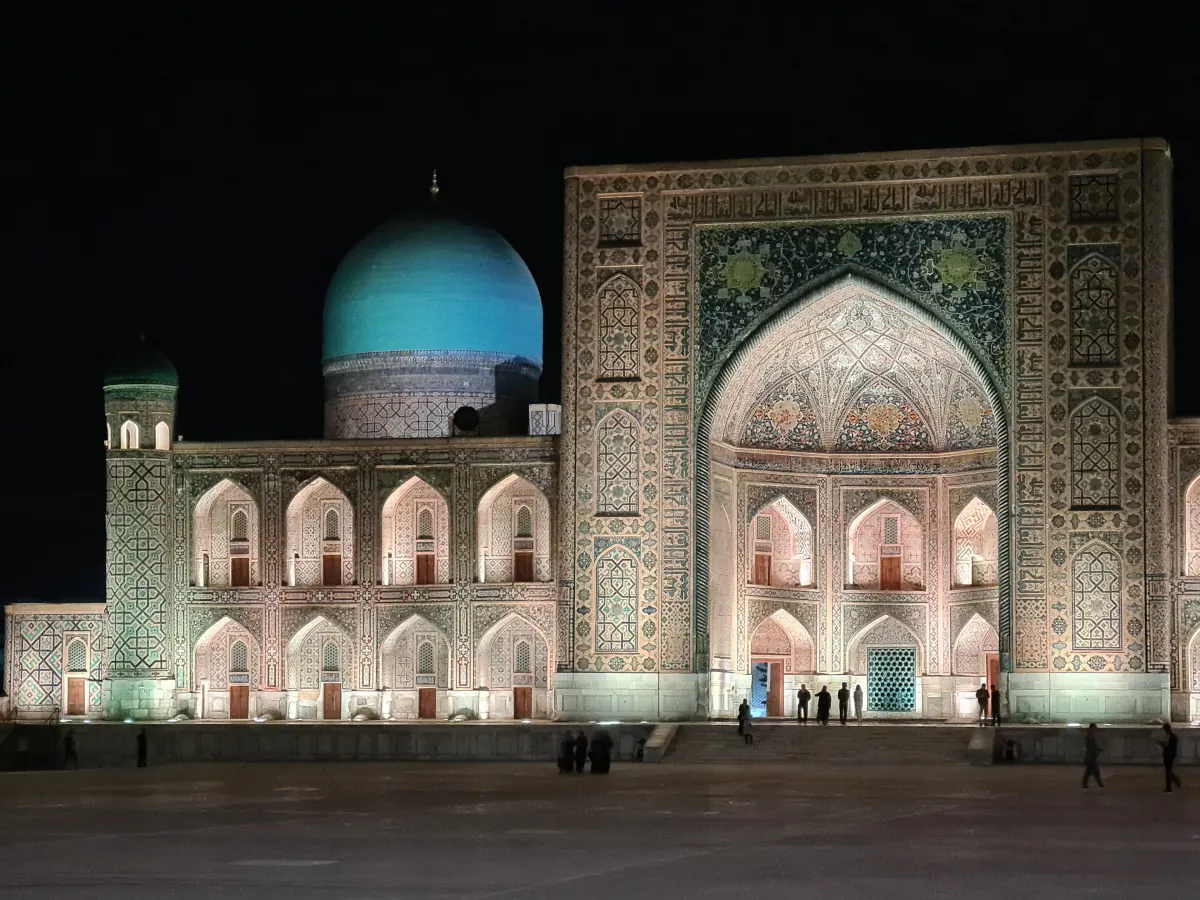
The quiet itself
People who keep this practice often say that what they notice first is not a feeling of holiness but simply the quiet. No messages. No one needing breakfast. A mind that has not yet been filled by the day. Whatever you ask for in those minutes, you ask for it with an unusually clear head.
So keep the phone out of it. Let the only screen you look at be the one that woke you, and put it face down once it has done its job.
Sources
- Sahih al-Bukhari 1145 — sunnah.com
- Sahih Muslim 758 — sunnah.com
- Sahih al-Bukhari 6464 — sunnah.com
- Qur’an 73:6 — quran.com
- Qur’an 17:79 — quran.com
- Ekirch, 2001 — Sleep We Have Lost: Pre-industrial Slumber in the British Isles, American Historical Review
- A. Roger Ekirch — research on segmented sleep and At Day’s Close (2005)
- Wehr, 1992 — In short photoperiods, human sleep is biphasic, Journal of Sleep Research
- Yetish et al., 2015 — Natural sleep and its seasonal variations in three pre-industrial societies, Current Biology
- Boyce, 2023 — Have we lost sleep? A reconsideration of segmented sleep in early modern England, Medical History
- Watson et al., 2015 — Recommended amount of sleep for a healthy adult (AASM and SRS consensus), Sleep
- Photos: cover (crescent moon before sunrise) — Musheer1999, Wikimedia Commons, CC BY-SA 4.0; yurts in the Kyzylkum — Carsten Siegel, Wikimedia Commons, CC BY-SA 4.0; Tilya-Kori at night — Lasterna, Wikimedia Commons, CC0.
More to read


