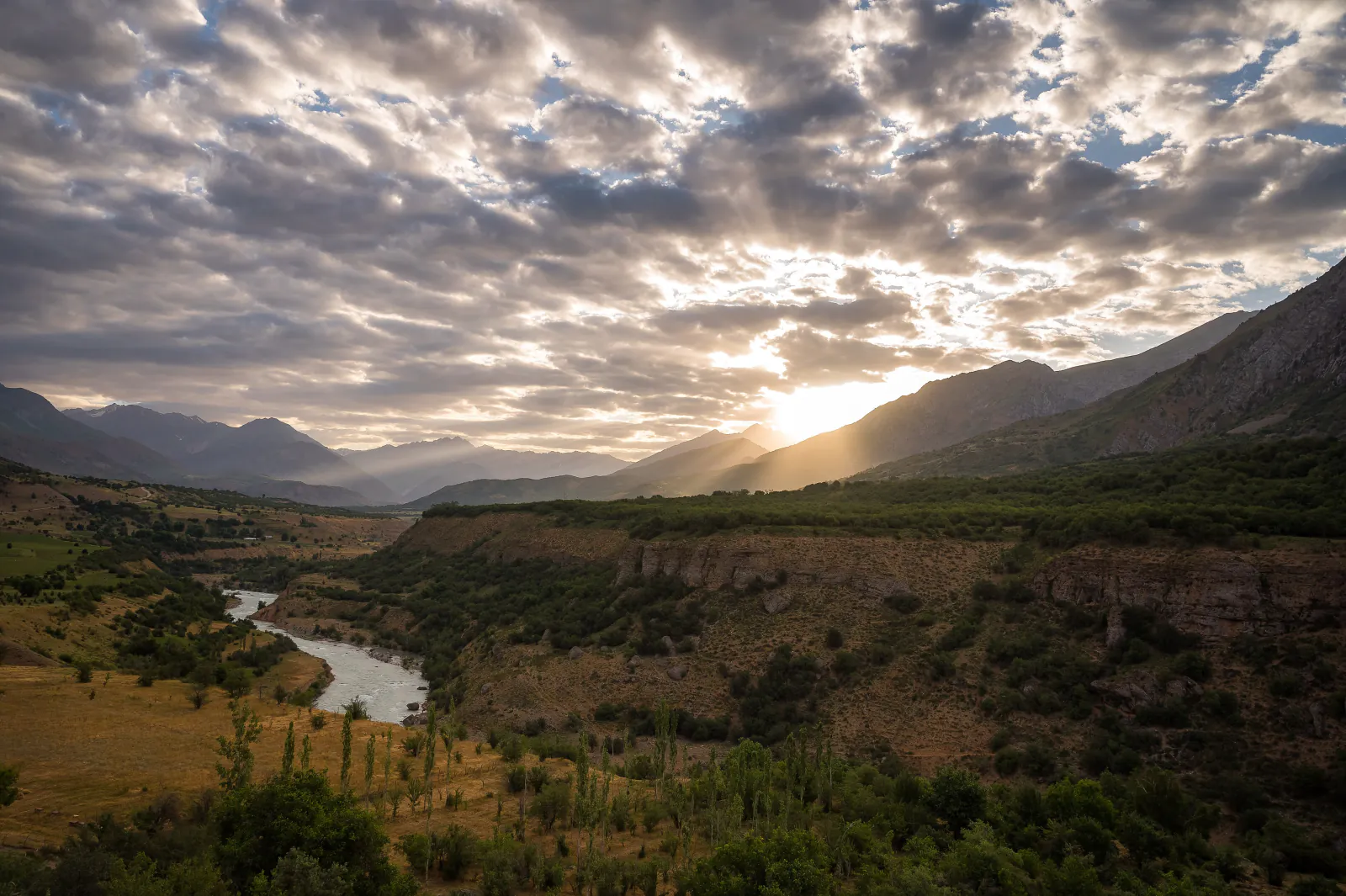
Let the dawn set your clock
Your eyes hold cells that watch the sky and tell your brain the time. How morning light makes the next Fajr easier, and evening light harder.
One summer, a sleep researcher from the University of Colorado, Kenneth Wright, took eight people camping in the Rocky Mountains for a week. No phones, no torches, no lamps. After sunset the only light was a campfire. Before and after the trip, his team measured one hormone in their blood: melatonin, the body’s signal that night has begun.
The result, published in Current Biology in 2013, was striking. After a week under the open sky, the campers’ inner night began close to sunset and ended just after sunrise. Their body clocks had moved about two hours earlier than at home. The people who had been the latest sleepers moved the most.
You do not need a tent to use this. The lesson is simpler: your body clock is set mostly by light, and a large part of the light you receive is something you choose. For anyone who wants to wake for Fajr, that is very good news.
A clock smaller than a grain of rice
Deep in the brain, just above the point where the two optic nerves cross, sits a pair of tiny clusters of nerve cells. Scientists call them the suprachiasmatic nucleus, or SCN: literally, “the nucleus above the crossing”. Together they are smaller than a grain of rice, and they are the body’s master clock.
This clock runs a rhythm of roughly one day, which is why it is called circadian, from the Latin circa diem, “about a day”. It tells the body when to feel sleepy, when to release hormones, when to raise and lower its temperature.
But “about a day” is not exactly a day. In a careful 1999 study at Harvard, Charles Czeisler and colleagues found that the human clock, left to itself in dim light, runs on average about 24 hours and 11 minutes. That is only a few minutes too long, but a few minutes every day add up. Without a daily reset, the clock slowly drifts later.
The main thing that resets it every day is light reaching your eyes. And for a long time, nobody quite knew how.
The cells that were hiding in plain sight
For more than a century, biology textbooks said the eye senses light with two kinds of cells: rods for dim light and cones for colour. Yet some mice without working rods and cones could still set their body clocks by light. Something else in the eye was watching the sky.
In February 2002, two papers in the journal Science answered the puzzle. David Berson’s team at Brown University showed that a small group of nerve cells in the retina respond to light by themselves. Samer Hattar and King-Wai Yau at Johns Hopkins showed that these cells carry a light-sensitive pigment called melanopsin, and that their fibres run straight to the SCN.
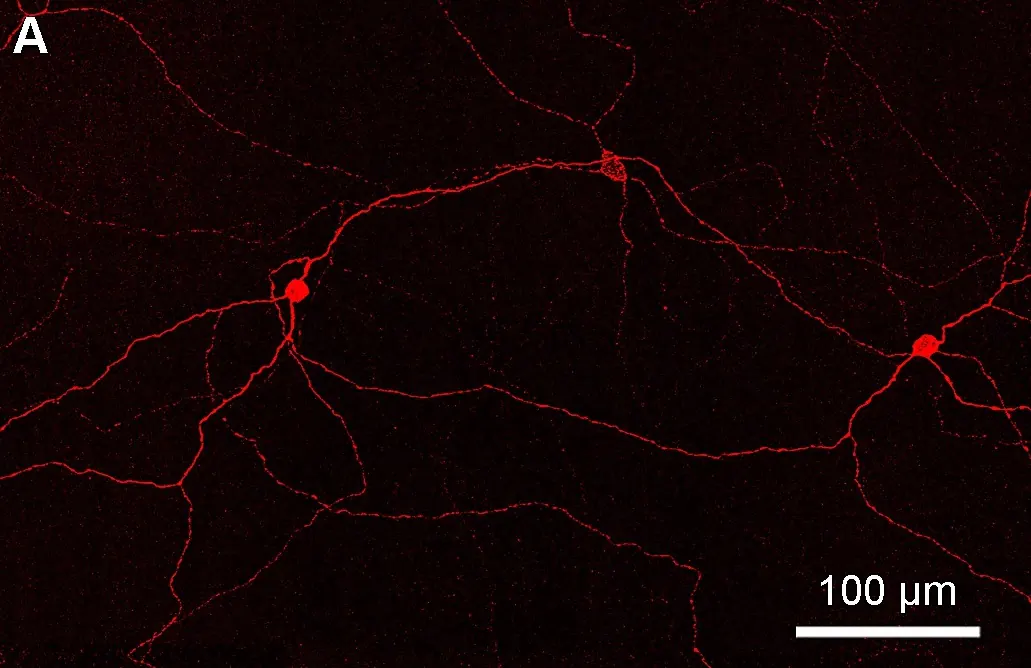
These cells do not help you read or recognise a face. Their job is to measure how bright the world is. They respond slowly and add up light over minutes, not moments. That is why a quick glance out of the window does little, while a few quiet minutes outdoors can do a lot.
The clock then speaks to the rest of the body through melatonin. A small gland in the brain releases it in the evening, a couple of hours before we usually fall asleep. Light, especially bright light, holds it back. You can think of melatonin as the body’s way of saying “it is dark now”.
فَالِقُ ٱلْإِصْبَاحِ وَجَعَلَ ٱلَّيْلَ سَكَنًا وَٱلشَّمْسَ وَٱلْقَمَرَ حُسْبَانًا ۚ ذَٰلِكَ تَقْدِيرُ ٱلْعَزِيزِ ٱلْعَلِيمِ
[He is] the Cleaver of daybreak, and He has made the night for rest and the sun and the moon for reckoning. That is the decree of the Almighty, the All-Knowing. (translation of the meaning)
Qur’an 6:96
Morning light pulls you earlier, evening light pushes you later
The clock does not treat all light the same. What matters is when it arrives. In a 2003 Harvard study, Sat Bir Khalsa and colleagues mapped this carefully: bright light in the biological evening and first half of the night moves the clock later, while bright light in the early morning moves it earlier.
Ordinary evening light is enough to matter. In 2011, Joshua Gooley and colleagues compared people who spent the hours before bed in normal room light (under 200 lux, a typical living room) with people in dim light. Room light delayed the start of melatonin in 99 percent of them and shortened the melatonin night by about 90 minutes.
Screens add to it. In a 2015 study, Anne-Marie Chang and colleagues had people read before bed either from a light-emitting e-reader or from a printed book. After the screen, they took longer to fall asleep, made less melatonin, had a later body clock and felt less alert the next morning.
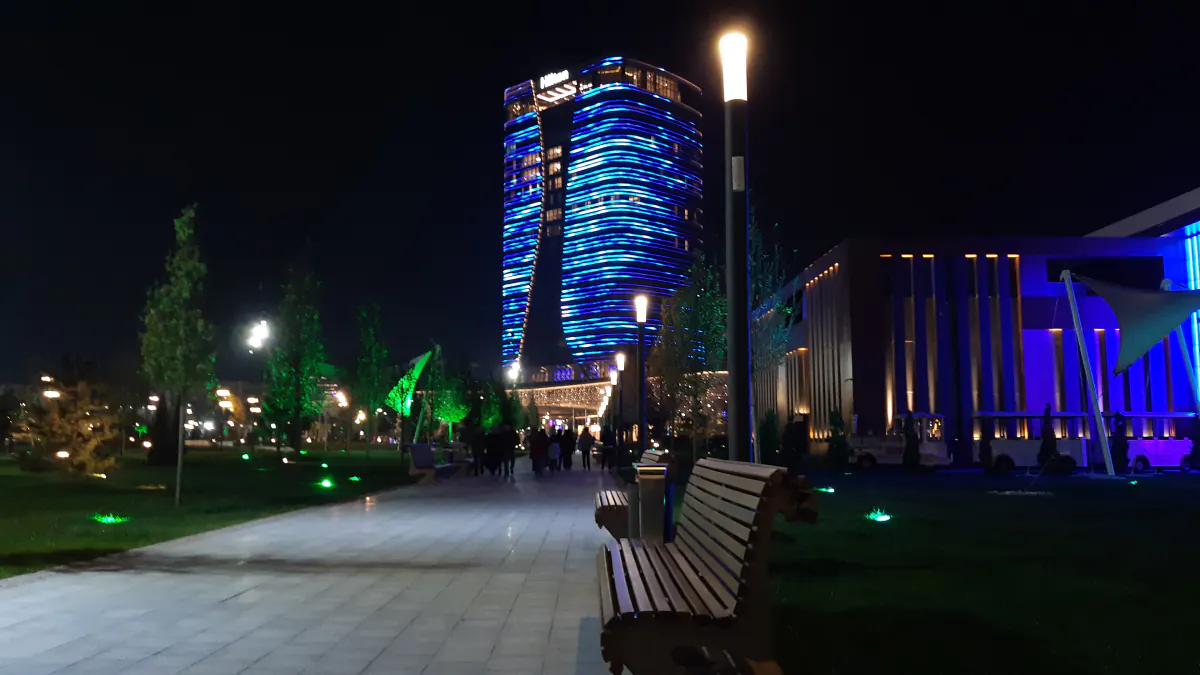
Daylight works the other way, and it is far stronger than indoor light. Wright’s campers received roughly four times more light during their week outdoors than in their normal lives. Even on a cloudy morning, the sky outside is usually many times brighter than a lit room.
What this means for Fajr
If your clock sits late, then 4:30 in the morning feels like the middle of the night because, for your body, it is. Every late evening under bright lamps and screens nudges the clock later. Every morning spent indoors with the curtains closed gives it nothing to pull it back.
Fajr has a gift built into it: it gets you up before the sun. If, after the prayer, you step outside as the sky brightens, into the yard, onto the balcony, on the walk home from the mosque, you meet the first daylight at exactly the time it pulls the clock earlier. The morning prayer and the morning light work together.
The body answers quickly. In a 2017 follow-up, Wright’s team found that even a single weekend of camping in summer produced about 69 percent of the shift they had seen after a full week. You do not need months to feel a difference; a week or two of steady mornings is often enough to notice it.
A fair word of caution: the camping studies were small, and a week in the mountains changes more than light. But their results match decades of careful laboratory work, and the advice that follows from them is gentle and costs nothing.
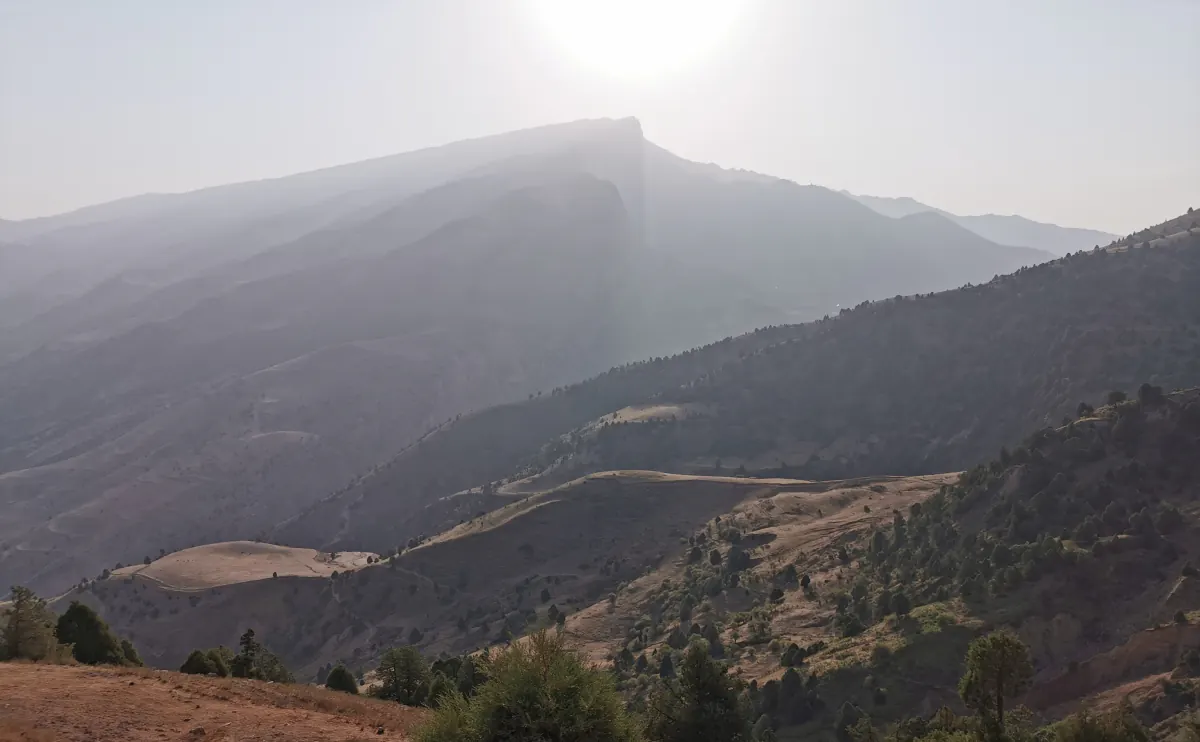
A simple routine for light
- After Fajr or just after sunrise, spend 10–20 minutes outside. Walk, sit in the yard, stand on the balcony. Longer on cloudy days. Do not look straight at the sun.
- Let daylight into the morning. Open the curtains, have breakfast by a window, work near one if you can.
- Dim the last hour or two before sleep. Use warm, low lamps instead of bright ceiling lights. The evidence on screen colour filters alone is mixed; lowering the brightness and putting the phone away does more.
- Keep the bedroom dark and keep the same waking time on weekends too, so the clock is not pulled back and forth.
The Fajr time itself moves a little every day as the seasons turn, and your clock will follow the sky best if your mornings follow it too. That is one reason Safa’s alarm is tied to the real Fajr time for your city, calculated fresh each day on your phone.
The sky has been keeping time for as long as there have been people to wake under it. Step out and let it set your clock.
Sources
- Wright et al., 2013 — Entrainment of the human circadian clock to the natural light-dark cycle, Current Biology
- Stothard et al., 2017 — Circadian entrainment to the natural light-dark cycle across seasons and the weekend, Current Biology
- University of Colorado Boulder, 2013 — A week’s worth of camping synchs internal clock to sunrise and sunset
- Berson, Dunn & Takao, 2002 — Phototransduction by retinal ganglion cells that set the circadian clock, Science
- Hattar et al., 2002 — Melanopsin-containing retinal ganglion cells, Science
- Czeisler et al., 1999 — Stability, precision, and near-24-hour period of the human circadian pacemaker, Science
- Khalsa et al., 2003 — A phase response curve to single bright light pulses in human subjects, Journal of Physiology
- Gooley et al., 2011 — Exposure to room light before bedtime suppresses melatonin onset, JCEM
- Chang et al., 2015 — Evening use of light-emitting eReaders negatively affects sleep, PNAS
- Qur’an 6:96 — quran.com
- Photos: cover — Arina Pan, Wikimedia Commons, CC BY-SA 4.0; melanopsin cells — Kim HL, Jeon JH et al., Wikimedia Commons, CC BY-SA 3.0; Tashkent City Park — Mysportedit, Wikimedia Commons, CC BY-SA 4.0; Chul-Bair — PJakopin, Wikimedia Commons, CC BY 4.0
More to read


