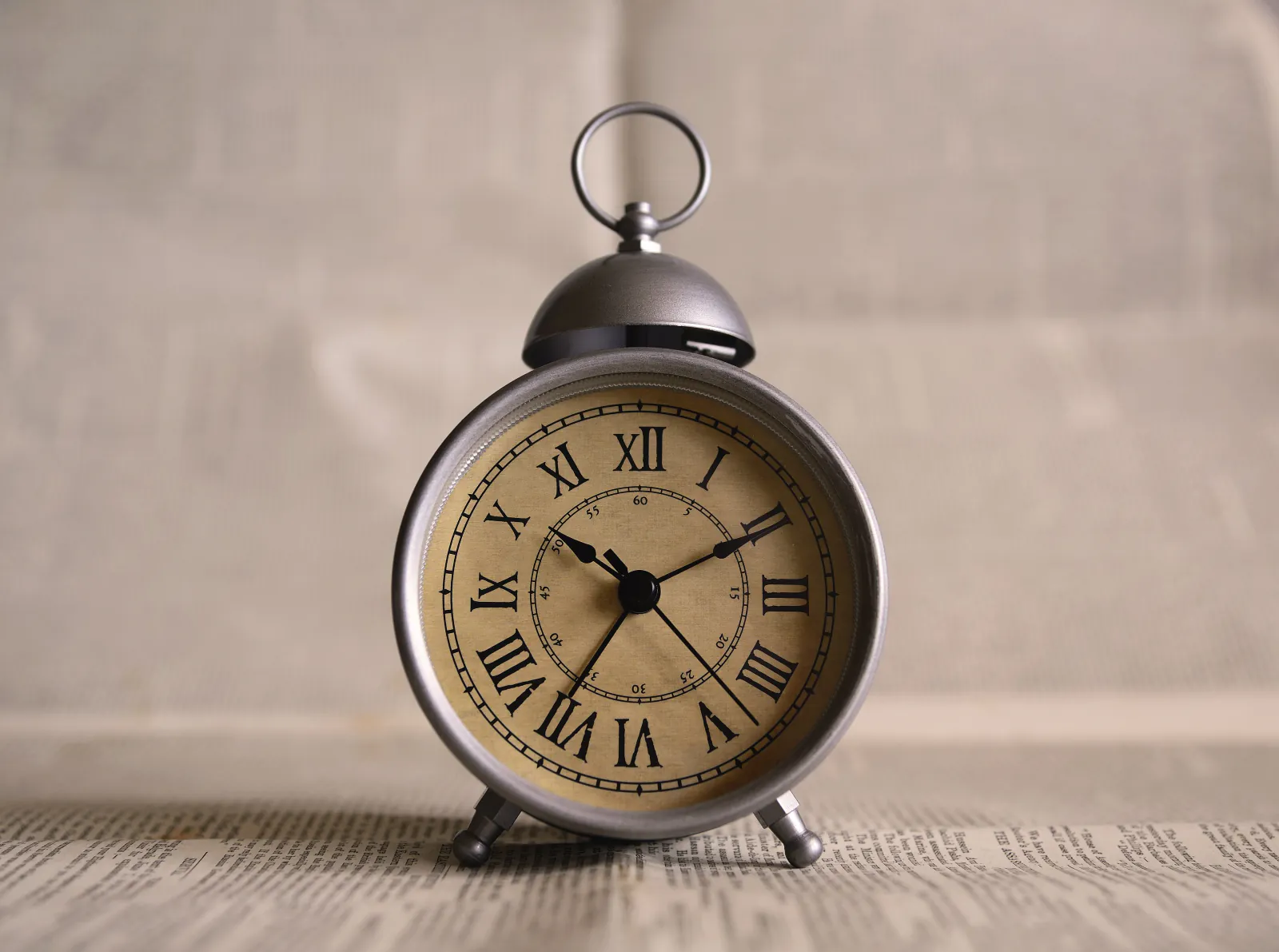
The snooze button: what “nine more minutes” really buys you
Where the snooze came from, what the research says (it is more mixed than you think), and why Fajr changes the arithmetic.
Almost every alarm in the world, from a bedside clock to the phone in your hand, offers you the same small deal in the dark: nine more minutes. You tap, the room goes quiet, and for a moment the deal feels like the kindest thing anyone has ever offered you.
But why nine? And what actually happens to your sleep in those minutes? The honest answers are more interesting than the usual advice to “never snooze”.
Why nine minutes?
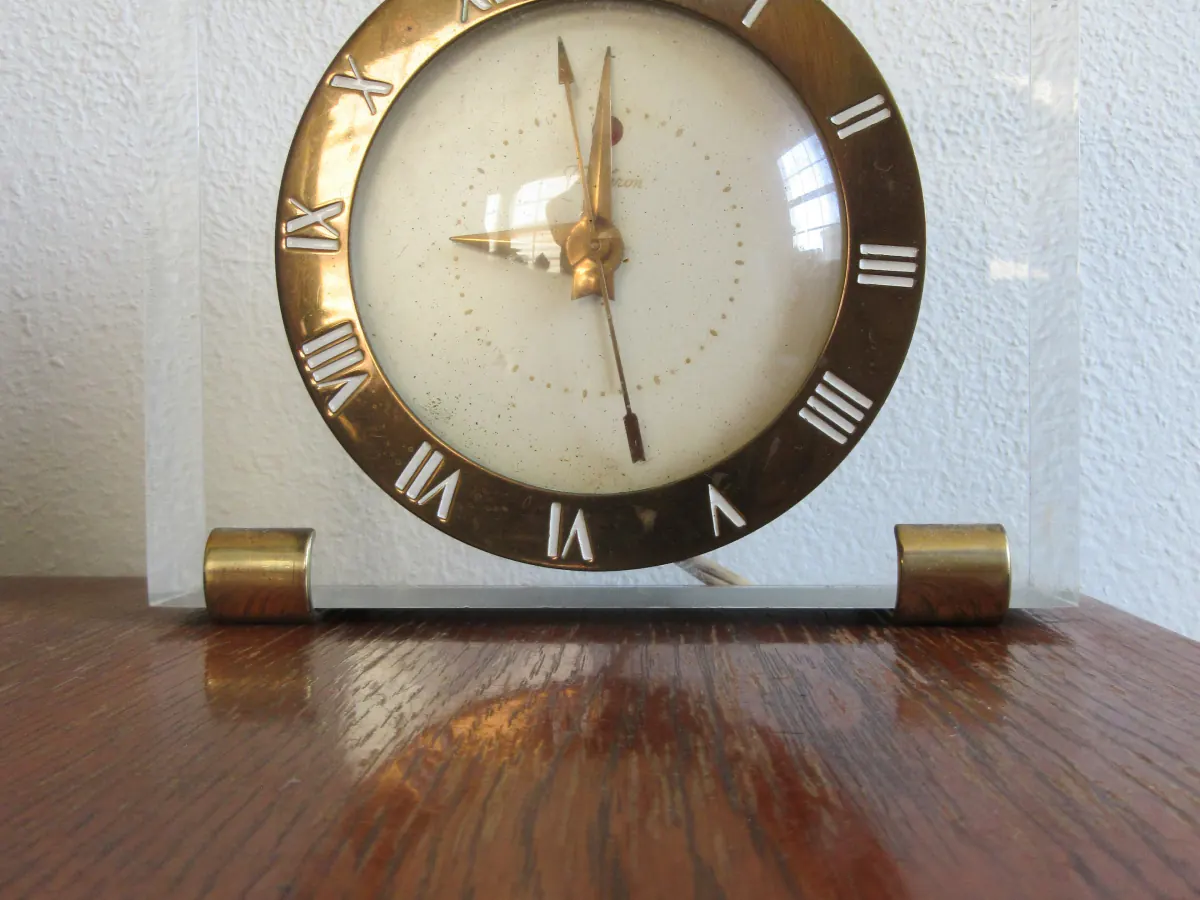
The story you often hear goes like this: in 1956 General Electric’s Telechron company released a “Snooz-Alarm”, and because of the way its gears were cut, engineers could make the pause just under ten minutes but not exactly ten, so they chose nine. It is a neat story. Clock collectors who have looked at the old advertisements are not convinced: the early ads promised “about ten minutes”, and the Westclox Drowse of 1959 let you choose five or ten.
Nine seems to have become the habit later, with digital clocks, and then simply stayed. Nobody ever wrote down a scientific reason for it. That is worth knowing: the pause you are offered every morning was never designed around your body. It is an industry’s habit.
Most of us do it
In 2023, sleep researcher Tina Sundelin and colleagues at Stockholm University surveyed 1,732 adults. Sixty-nine percent said they snooze at least sometimes. On mornings when they did, they spent about 22 minutes in the snooze cycle on average. The most common reason they gave was simple: they felt too tired to wake up.
A year earlier, a team at the University of Notre Dame tracked 450 working adults with wearable devices. Fifty-seven percent were habitual snoozers. Their lead researcher, Stephen Mattingly, put the main finding in one line: “So many people are snoozing because so many people are chronically tired.”
The case against: sleep in pieces
The usual worry about snoozing is fragmented sleep — sleep that is broken into short pieces. Each ring pulls you up towards waking, and the minutes in between are mostly light, restless sleep. The Notre Dame snoozers did not sleep less overall, but their devices showed lighter sleep in the hour before they got up and a higher resting heart rate.
A small laboratory study from Japan in 2022, led by Keiko Ogawa, went further. When ten students used a snooze alarm, their reactions after getting up were slower and they felt less vigorous than after waking to a single alarm. The recordings showed more brief awakenings and more shifts between sleep stages in the final twenty minutes. The authors concluded that snoozing made the morning grogginess last longer.
The case for: it may not be the villain
Sundelin’s team also ran a careful experiment with 31 people who snooze regularly. On one morning they snoozed for thirty minutes; on another they got up at the first alarm. The snoozers still slept for more than twenty of those thirty minutes. The researchers found no clear effect on stress hormones, mood, sleepiness or the night’s sleep. On some tests right after waking, the snooze morning was even slightly better — perhaps because nobody was dragged straight out of deep sleep.
Sundelin herself adds the important caveat: the study included only people who already snooze and fall back asleep easily, and snoozing “is most likely not for everyone”. So the fair summary is this. The evidence is mixed. For some habitual snoozers, half an hour of snoozing may cost little. For others it seems to make the fog worse. And behind both findings sits the same quiet fact: most of us snooze because we did not sleep enough.
Why Fajr changes the arithmetic
Notice what the Stockholm experiment measured: how people felt and performed after a morning in the lab. It did not ask whether they got up in time for anything, because in the lab there was nothing to be late for. Fajr is different. It has a window, and the window closes.
“The time of the morning prayer is from the appearance of dawn, as long as the sun has not risen.” (translation of the meaning)
— Sahih Muslim 612, narrated by Abdullah ibn Amr
On an ordinary workday, twenty-two minutes of snoozing moves breakfast. Before Fajr, those same minutes can quietly eat the whole window, especially if the first alarm was already set near the end of it. And every “just one more” is decided by the least awake version of you — the same groggy brain the researchers were measuring. Snoozing is easiest to stop the night before, not at 4 a.m.

If you want to stop
- Set the alarm for the real time. Many snoozers set an early alarm “to wake slowly”. Those minutes are rarely good sleep. Give yourself the full sleep instead and wake once.
- Make the first ring the only ring. Put the phone across the room, or in the next room, so that switching it off means standing up. Once you are standing, half the battle is done.
- If you like a gentle start, build it in on purpose. A quiet heads-up a quarter of an hour before the alarm lets you wake on your own terms instead of in pieces. Safa’s Fajr alarm has one, with an “I’m awake” button — and it does not offer a snooze that would land after sunrise.
- Fix the reason, not the button. If you need three alarms every day, the problem is usually the night before. Move bedtime earlier by fifteen minutes a week until the first alarm is enough.
Nobody needs to feel guilty about a snooze button. It was built to be pressed, by people who did not have your mornings in mind. You simply get to decide, calmly and in advance, that on the mornings that matter most, nine more minutes is not a deal you want.
Sources
- Sundelin, Landry & Axelsson, 2023 — Is snoozing losing?, Journal of Sleep Research
- Stockholm University press release, 2023 — You don’t lose if you snooze (ScienceDaily)
- Mattingly et al., 2022 — Snoozing: an examination of a common method of waking, Sleep
- University of Notre Dame news, 2022 — Hitting the snooze button? You’re far from alone
- Ogawa, Kaizuma-Ueyama & Hayashi, 2022 — Effects of using a snooze alarm on sleep inertia after morning awakening, Journal of Physiological Anthropology
- SlashGear — Why is snooze nine minutes? (on the Telechron and Westclox history)
- Clockhistory.com — Westclox Drowse alarm clocks
- Sahih Muslim 612 — sunnah.com
- Photos: cover — Ales Krivec, Wikimedia Commons, CC0; Telechron clock — Infrogmation of New Orleans, Wikimedia Commons, CC BY-SA 4.0; dawn over Navoiy — Behruznurullayevv, Wikimedia Commons, CC0.
More to read


