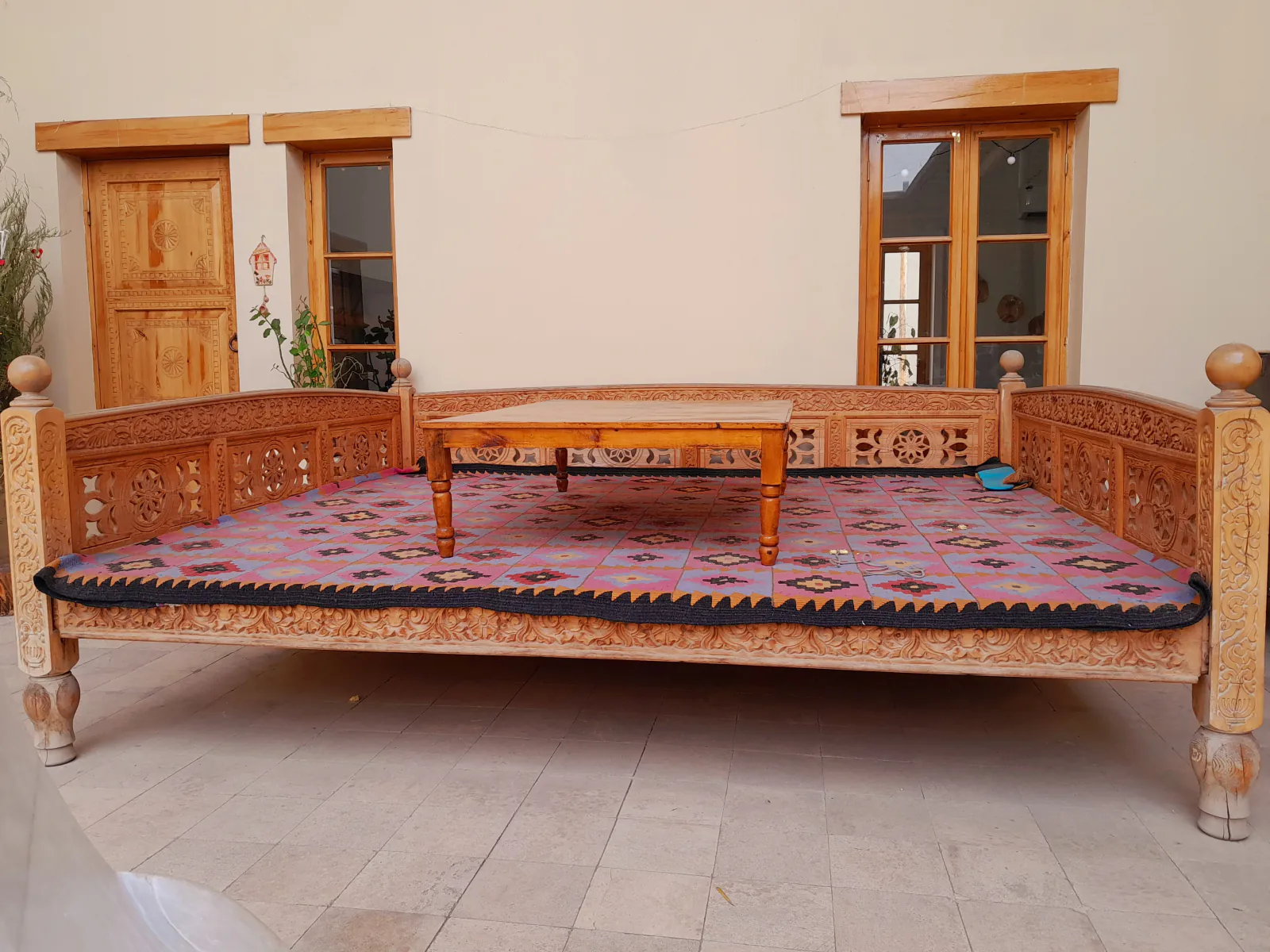
Qaylula: the short midday rest that makes Fajr easier
The Companions rested at midday; NASA tested naps on pilots over the Pacific. What both teach someone whose summer nights are too short.
In the middle of June in Tashkent, Isha comes at around a quarter to ten at night, and Fajr by the O‘zMI calculation at around five past three in the morning. Between them lie barely five and a half hours. Anyone who prays both, and has to be at work by eight, knows the arithmetic does not work.
The answer is older than electric light. In the Muslim tradition it has a name, qaylula: a short rest around midday. And in the last forty years, sleep science has found out a good deal about why it works, and how to do it so that it helps rather than harms.
An old habit with a name
Among the Companions of the Prophet ﷺ in Madinah, the midday rest was simply part of the day. It was so ordinary that it served as a way of describing time. Sahl ibn Sa‘d remembered Fridays like this:
We used to offer the Jumu‘ah prayer with the Prophet ﷺ and then take the afternoon nap. (translation of the meaning)
— Sahih al-Bukhari 941
In another narration, also in al-Bukhari, Sahl says they would not take the qaylula or eat their midday meal on Friday until after Jumu‘ah. The point is quiet but clear: on other days, lunch and a short rest were the normal rhythm, and on Friday the prayer came first.
وَمِنْ ءَايَـٰتِهِۦ مَنَامُكُم بِٱلَّيْلِ وَٱلنَّهَارِ وَٱبْتِغَآؤُكُم مِّن فَضْلِهِۦٓ ۚ إِنَّ فِى ذَٰلِكَ لَـَٔايَـٰتٍ لِّقَوْمٍ يَسْمَعُونَ
And of His signs is your sleep by night and day and your seeking of His bounty. Indeed in that are signs for a people who listen. (translation of the meaning)
Qur’an 30:23
Many scholars over the centuries described the qaylula as a recommended habit. A few popular sayings about it circulate whose chains of narration are disputed among hadith scholars, so we leave them aside. For questions of detail, your local imam is the right person to ask.
What NASA found in the cockpit
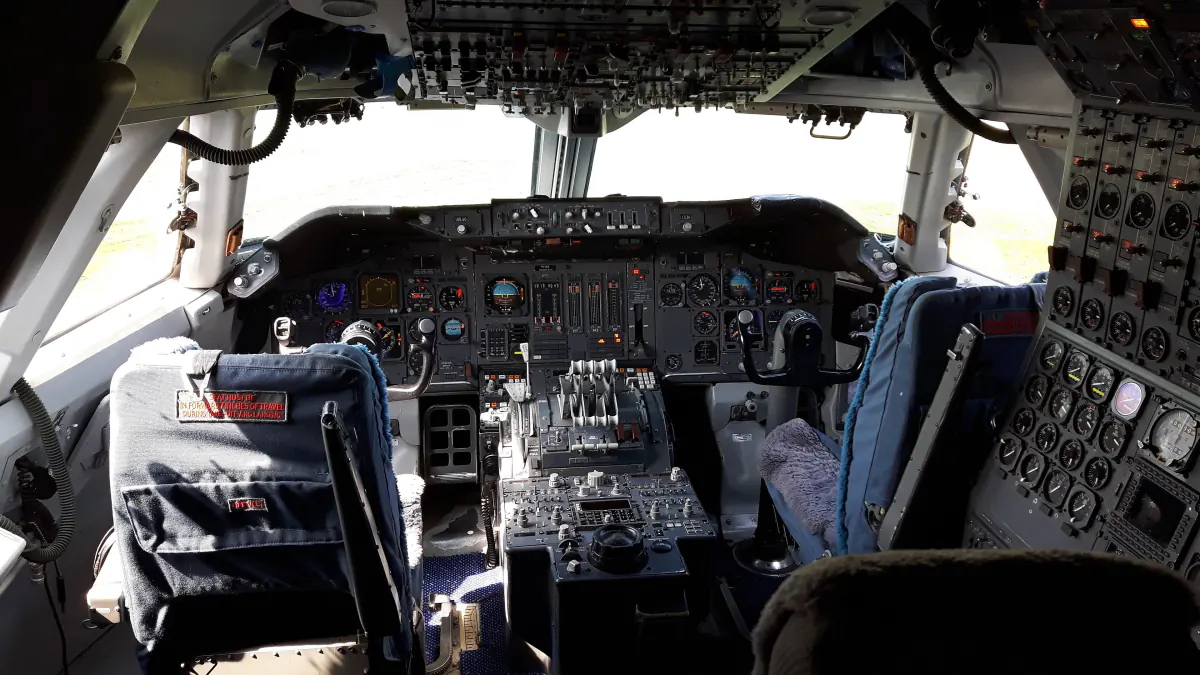
Fast-forward to the early 1990s, and to the flight decks of Boeing 747s crossing the Pacific. Pilots on long night flights were fighting sleep, and some were losing. Researchers at NASA’s Ames Research Center, led by Mark Rosekind, together with the US aviation authority, the FAA, ran an unusual experiment.
Twenty-one pilots wore brain-wave recorders. One group was allowed a planned 40-minute rest in their seats during the quiet cruise part of the flight, while the others flew as usual. The resting pilots fell asleep on 93 percent of their chances, usually within about six minutes, and slept for 26 minutes on average.
The pilots who had not rested reacted 10 to 16 percent more slowly on the in-flight tests. In the last hour and a half of the flight, through descent and landing, their brain recordings showed 120 brief moments of drifting towards sleep, against 34 in the group that had napped. And during the 40 minutes set aside for rest, four of the nine pilots who were meant to stay awake fell asleep without meaning to.
You may have seen this study summed up as “a 26-minute nap improved performance by 34 percent and alertness by 54 percent”. Those round figures are how it is usually retold. The report’s own numbers, above, are more modest, and more convincing for it.
Why ten minutes can beat thirty
If a little sleep helps, is more better? In 2006, Amber Brooks and Leon Lack at Flinders University in Australia tested this directly. Twenty-four healthy young adults slept only about five hours at night, then came to the lab and napped at 3 pm for exactly 5, 10, 20 or 30 minutes, or not at all.
- 5 minutes gave few benefits.
- 10 minutes brought immediate improvements in sleepiness, mood and mental performance, some lasting up to 155 minutes.
- 20 minutes also helped, but the benefits only appeared about 35 minutes after waking.
- 30 minutes first left people groggy and slower, and only later did they improve.
That grogginess has a name, sleep inertia: the heavy, confused feeling of waking from deeper sleep. The longer a nap runs, the more likely you are to sink into deep sleep, and the harder the climb back out. A short nap stays in light sleep and ends before the fall.
The afternoon dip is real
Most people know the heavy feeling that comes an hour or two after lunch. It is not only the food. The sleep researcher Timothy Monk noted in 2005 that this post-lunch dip is linked to a real rise in sleepiness in the early afternoon, and it can appear even in people who have eaten nothing and do not know what time it is. A heavy, carbohydrate-rich lunch makes it worse.
In other words, the body has its own window for a midday rest, roughly after Zuhr and before mid-afternoon. The qaylula fits into it naturally.

How to take a qaylula
- Keep it to 10–20 minutes. Set a timer for about 25 minutes, to allow a few minutes to fall asleep. A regular alarm on your phone is enough; in Safa, a regular alarm never touches your Fajr streak.
- Take it early in the afternoon, after Zuhr and ideally before about 3 pm. A late nap eats into the night’s sleep and makes the next Fajr harder.
- Eat lightly before it. A heavy plov at lunch invites a two-hour sleep, not a twenty-minute one.
- Lie down or lean back somewhere quiet and dim. If sleep does not come, that is fine. Do not chase it; just rest.
- Wake up gently. Wash your face or renew your wudu, step into daylight for a minute, and the last of the grogginess will lift.
- If you sleep badly at night, keep the qaylula very short or skip it for a while, and see whether the night improves.
One more honest note. Some large observational studies have linked long, daily daytime sleep, an hour or more, with poorer health. Nobody is sure which causes which; people who are already unwell often sleep more in the day. The short rest described here is a different thing.
The Companions did not have brain-wave recorders, and NASA did not have Madinah. Both arrived at the same small, generous habit: when the night is short, the day can give a little of it back.
Sources
- Rosekind et al., 1994 — Crew Factors in Flight Operations IX: Effects of Planned Cockpit Rest on Crew Performance and Alertness in Long-Haul Operations, NASA TM 108839
- Rosekind et al., 1995 — Alertness management: strategic naps in operational settings, Journal of Sleep Research
- Brooks & Lack, 2006 — A brief afternoon nap following nocturnal sleep restriction: which nap duration is most recuperative?, Sleep
- Monk, 2005 — The post-lunch dip in performance, Clinics in Sports Medicine
- Sahih al-Bukhari 939 and 941 — sunnah.com
- Qur’an 30:23 — quran.com
- Photos: cover — Miss Kamola, Wikimedia Commons, CC BY-SA 4.0; 747 flight deck — LP98, Wikimedia Commons, CC BY-SA 4.0; teapot and piyolas — Panpanchik, Wikimedia Commons, CC BY-SA 4.0
More to read


