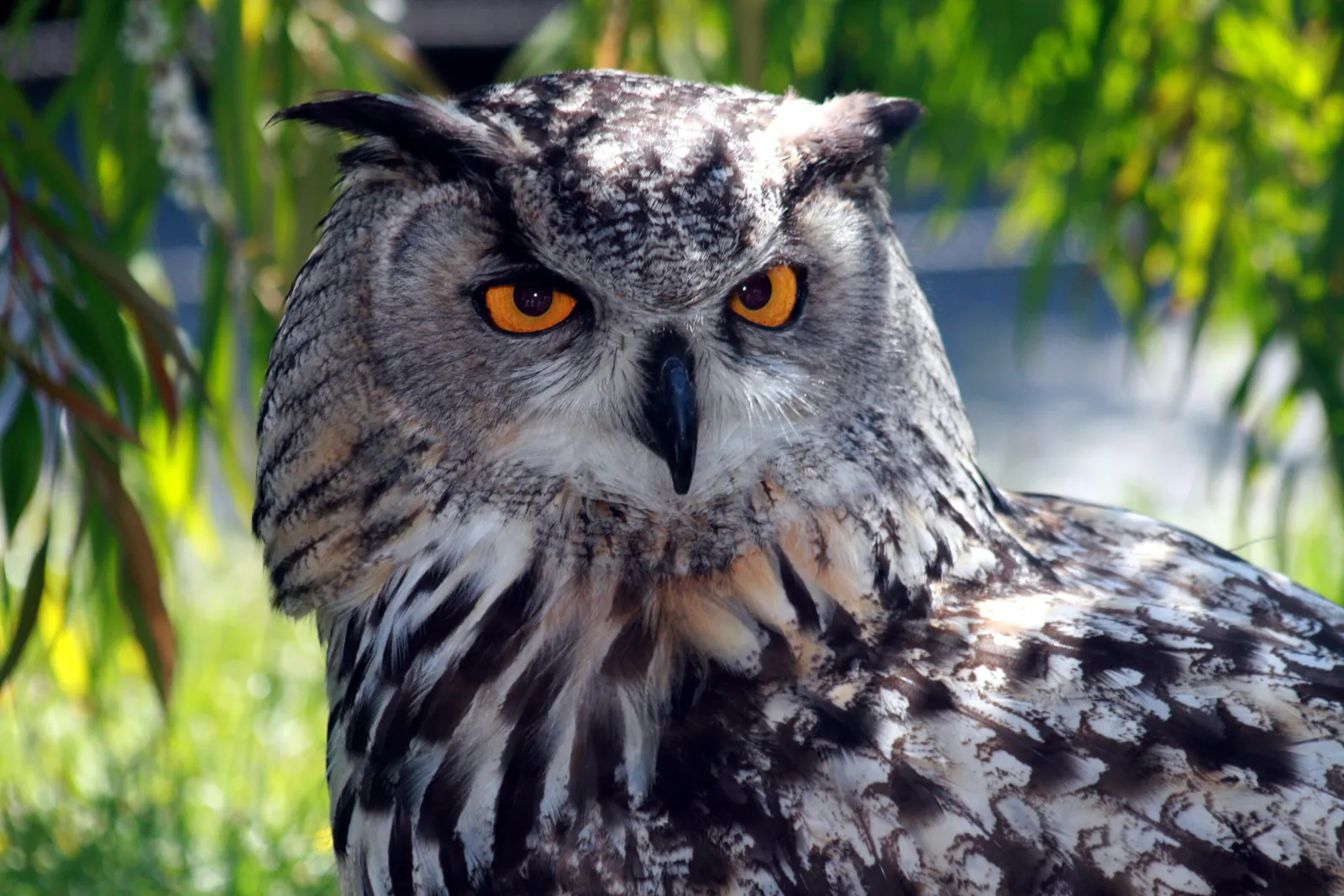
Larks and owls: what your chronotype means for Fajr
Some people wake before the alarm, others come alive at night. Neither is a flaw of character, and the body clock can move further than you think.
Picture two brothers in one house. The younger one is awake before the alarm, humming in the kitchen while the kettle boils. The older one hears the same alarm as if through a wall of water, and by ten at night he finally feels clever and awake. Their mother calls one of them lazy.
Science has a kinder and more accurate word for what is going on: chronotype. The younger brother is a lark, the older one an owl. The difference is real, it is partly written in the genes, and it changes over a lifetime. It is also, and this matters for Fajr, partly movable.
What a chronotype is
Everyone has an inner clock that runs on a rhythm of about a day. Your chronotype is simply where that clock sits compared with the sun: early, late or, for most people, somewhere in the middle.
The Munich chronobiologist Till Roenneberg and his colleagues found a clever way to measure it in large numbers of people. Their Munich ChronoType Questionnaire asks when you sleep on days when no alarm and no job decide for you. The middle point of that free sleep is a good sign of where your clock really is.
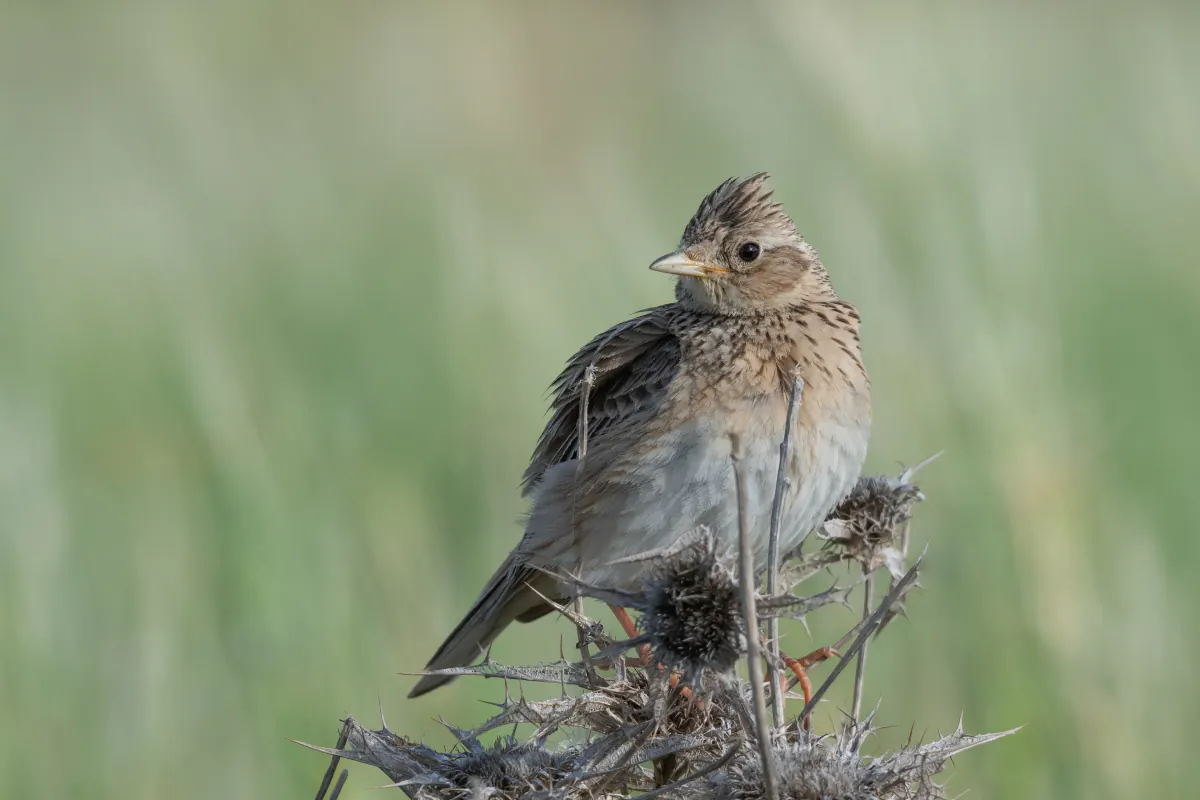
Owls are not lazy
Part of your chronotype is inherited. In 2019, a team led by Samuel Jones at the University of Exeter studied the genes of 697,828 people and found 351 places in the genome linked to being a morning person. Many of those genes act in the brain’s clock and in the retina, the part of the eye that senses light.
But look at the size of the effect. The 5 percent of people carrying the most “morning” gene variants slept, on average, only about 25 minutes earlier than the 5 percent carrying the fewest. Genes give you a lean, not a verdict.
Age matters too. In 2004, Roenneberg’s team looked at about 25,000 people and saw a clear pattern. Children tend to be early. Through the teenage years the clock slides later and later, reaching its latest point around the age of 20, and girls reach that peak earlier than boys. After that, people slowly become earlier again for the rest of their lives. The team even suggested this turning point as a biological marker for the end of adolescence.
So when a sixteen-year-old cannot fall asleep at ten, it is not only stubbornness. His clock is doing what clocks of sixteen-year-olds do. That deserves patience, not scorn.
Social jet lag
The trouble begins when the inner clock and the outer schedule disagree. In 2006, Marc Wittmann, Roenneberg and colleagues gave the Munich questionnaire to 501 volunteers and named the gap social jet lag: the difference between when you sleep on work days and when you sleep on free days.
If you sleep from midnight to seven on weekdays and from three to eleven on weekends, your body flies several time zones west every Friday and back every Monday, without leaving the house. Late types carried the most of this, and in the study it went together with poorer wellbeing and more use of stimulants such as nicotine, most strongly in people under 25.
That is a correlation, not proof that one causes the other. But it points in a useful direction: a steady schedule, the same on Monday and on Saturday, is kind to the body.
A clock that listens to light
Here is the hopeful part. When Kenneth Wright took people camping in 2013, with only sunlight and a campfire, their clocks moved about two hours earlier within a week. And the late types moved the most, until their clocks looked much like those of the early types.
Much of what we call being an owl is an owl’s genes living in a modern house: dim days indoors and bright evenings. Change the light, and the clock follows, not all the way, but a long way.
وَهُوَ ٱلَّذِى جَعَلَ لَكُمُ ٱلَّيْلَ لِبَاسًا وَٱلنَّوْمَ سُبَاتًا وَجَعَلَ ٱلنَّهَارَ نُشُورًا
And it is He who has made the night for you as clothing, and sleep a rest, and has made the day a rising. (translation of the meaning)
Qur’an 25:47
O Allah, bless my Ummah in their early mornings. (translation of the meaning)
— Jami‘ at-Tirmidhi 1212, graded hasan by at-Tirmidhi
A gentle plan for an owl who wants Fajr
Fajr does not move for anyone’s chronotype. But how you get there can be gentle. Big jumps usually fail: going to bed two hours early just means two hours of lying awake. Small, steady steps work better.
- Start from where you are. For one week, note when you actually fall asleep and wake, on work days and free days.
- Move 15 minutes at a time. Every three or four days, bring your bedtime and your wake time 15 minutes earlier. Stop when your sleep window ends near Fajr.
- Meet the morning light. After Fajr or just after sunrise, spend 10–20 minutes outdoors. This is the strongest pull an owl’s clock can get.
- Dim the evening. Lower the lights and put screens away an hour or two before bed. Evening light is what keeps pushing an owl later.
- Keep weekends close to weekdays. Sleeping in by three hours on Saturday undoes half a week of work. An hour is a kinder limit.
- Borrow sleep at midday. If the night is short, a 10–20 minute rest after lunch, the qaylula, can carry you through the afternoon without spoiling the next night.
The first two weeks are the hardest. An alarm that asks you to get up and do something small, walk a few steps or solve a short puzzle, can help an owl through the grogginess; Safa’s Fajr alarm works this way, and it moves with the real Fajr time every day.
One honest note: a few people have a clock so late that even with light and patience they cannot fall asleep before two or three in the morning. Doctors call this delayed sleep phase, and it is worth talking to a doctor about rather than blaming yourself.
Larks and owls are both part of how people are made. If you are an owl, you are not broken, and you are not lazy. You simply have a little further to travel to the dawn, and the dawn is patient.
Sources
- Roenneberg et al., 2004 — A marker for the end of adolescence, Current Biology
- Wittmann, Dinich, Merrow & Roenneberg, 2006 — Social jetlag: misalignment of biological and social time, Chronobiology International
- Jones et al., 2019 — Genome-wide association analyses of chronotype in 697,828 individuals, Nature Communications
- Wright et al., 2013 — Entrainment of the human circadian clock to the natural light-dark cycle, Current Biology
- Qur’an 25:47 — quran.com
- Jami‘ at-Tirmidhi 1212 — sunnah.com
- Photos: cover — Brocken Inaglory, Wikimedia Commons, CC BY-SA 3.0; skylark — El Golli Mohamed, Wikimedia Commons, CC BY-SA 4.0; village sunrise — Xoqoni Said, Wikimedia Commons, CC0; Vadigan — Sehrliolam, Wikimedia Commons, CC0
More to read


