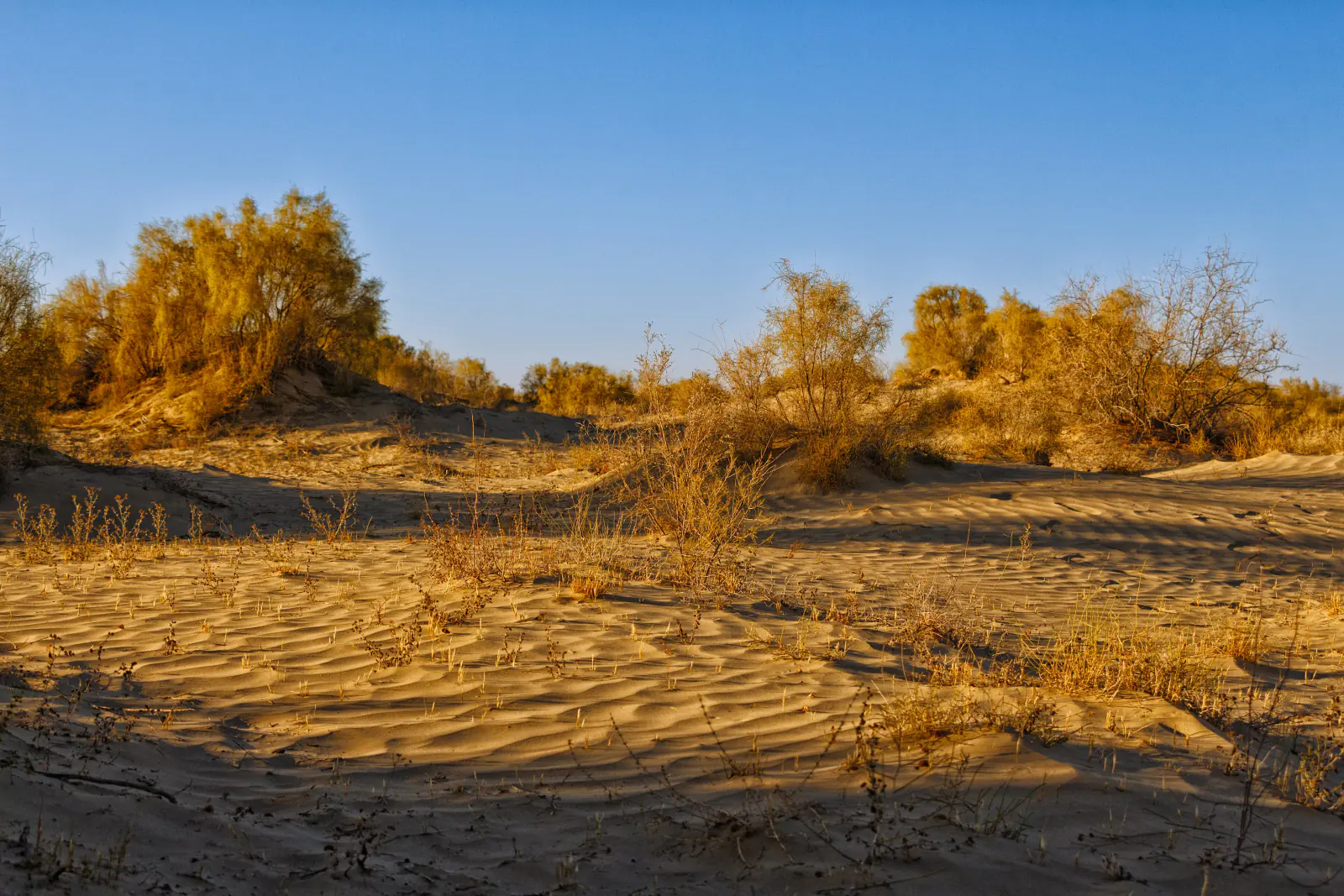
Fajr through the year: why it is 3 a.m. in June and 6 in December
In Tashkent, Fajr moves by more than three hours across the year. Here is why, with real numbers for four cities, and how to sleep well in every season.
On a June night in Tashkent, the last prayer of the day begins at about a quarter to ten, and the first prayer of the next day at three in the morning. Between them lie barely five hours and twenty minutes. Six months later, in December, the same two prayers are almost twelve hours apart.
Anyone who has tried to keep Fajr all year knows this in their body. Summer mornings feel impossibly early; winter mornings collide with the school run. None of it is random. It is the shape of our planet and its path around the Sun, and once you see it, the year becomes easier to plan.
فَالِقُ ٱلْإِصْبَاحِ وَجَعَلَ ٱلَّيْلَ سَكَنًا وَٱلشَّمْسَ وَٱلْقَمَرَ حُسْبَانًا ۚ ذَٰلِكَ تَقْدِيرُ ٱلْعَزِيزِ ٱلْعَلِيمِ
He is the Cleaver of daybreak, and He has made the night for rest, and the sun and the moon for calculation. That is the ordaining of the Almighty, the All-Knowing. (translation of the meaning)
Qur’an 6:96
A tilted planet
The Earth spins around an axis that is tilted about 23.4 degrees from upright. As we travel around the Sun, that tilt stays pointed the same way in space. In June our northern half leans toward the Sun, so the Sun climbs high and stays up long. In December we lean away, so the Sun rises late, stays low and sets early.
Fajr follows the same swing, with one extra twist. Fajr is not sunrise. In Uzbekistan it is the moment the Sun, still hidden, is 15.5 degrees below the eastern horizon, the angle used by the Muslim Board of Uzbekistan. So Fajr moves both with the sunrise and with how long the Sun takes to climb those 15.5 degrees.
Why summer twilight is longer
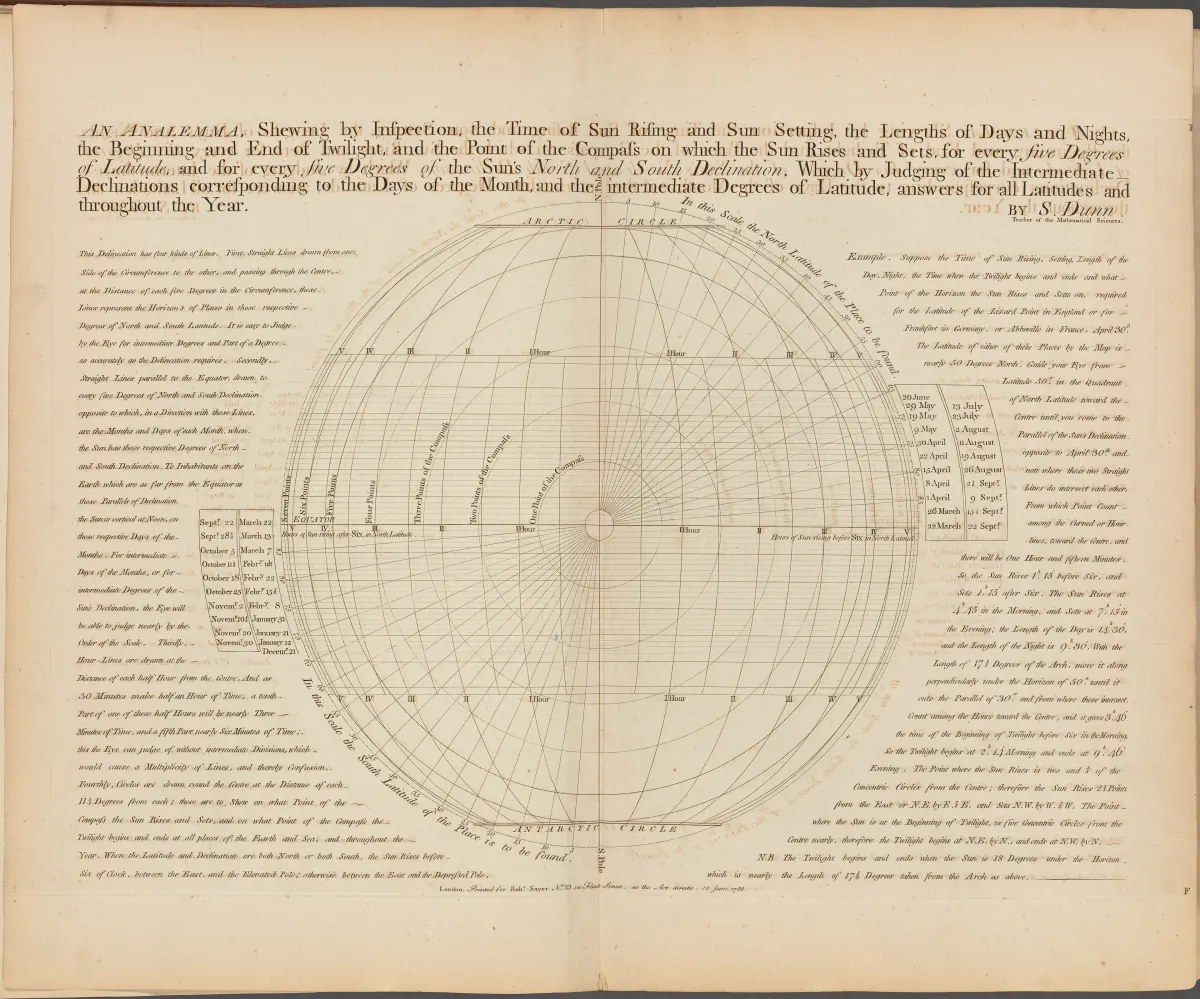
Near the equator the Sun rises and sets almost straight up and down, so it crosses 15.5 degrees quickly. At our latitudes, around 37 to 43 degrees north, its path meets the horizon at a slant, like a plane coming in to land. The slant is gentlest around the summer solstice.
There is a second reason. On a June night in Tashkent the Sun never sinks very deep: at midnight it is only about 25 degrees below the horizon. It turns around not far below the edge of the world, and it spends a long time in the band where twilight lives. My calculation gives a gap between Fajr and sunrise in Tashkent of about 106 minutes in late June, 86 minutes in late December, and only about 79 minutes around the equinoxes.
The numbers for four cities
We computed these with the standard NOAA solar position formulas, Fajr at 15.5° below the horizon and sunrise when the Sun’s upper edge appears, in local time (UTC+5). Each line gives Fajr, then sunrise in brackets, for 21 June, 20 March, 23 September and 21 December 2026:
- Tashkent: 03:04 (04:50) · 05:08 (06:27) · 04:52 (06:11) · 06:19 (07:45)
- Andijan: 02:55 (04:39) · 04:56 (06:15) · 04:41 (05:59) · 06:06 (07:31)
- Termez: 03:36 (05:11) · 05:21 (06:35) · 05:05 (06:19) · 06:20 (07:41)
- Nukus: 03:34 (05:24) · 05:45 (07:05) · 05:29 (06:50) · 07:00 (08:28)
Treat these as approximate, within about two minutes. As a check, the same method gives 04:53 and 06:12 for Tashkent on 24 September, exactly what the Muslim Board’s timetable shows that day. Your mosque’s timetable may add a few minutes of caution, and that is the one to follow.
A few things stand out. Nukus prays about 40 to 55 minutes later by the clock than Andijan, because all of Uzbekistan shares one time zone while the country stretches across almost 13 degrees of longitude. Termez, the furthest south, has the smallest swing: its Fajr moves by 2 hours 44 minutes across the year, against 3 hours 15 minutes in Tashkent and 3 hours 26 minutes in Nukus. And the extremes do not fall on the solstices: in Tashkent the earliest Fajr is around 17 June, at 03:03, and the latest around 7 January, at 06:24, because the Earth’s oval orbit shifts solar noon by a few minutes over the year.
What this does to your sleep
Sleep researchers agree that most adults need at least seven hours a night; that was the joint recommendation of the American Academy of Sleep Medicine and the Sleep Research Society in 2015. Now look at June again. In Tashkent the time from Isha to Fajr is about 5 hours 18 minutes. In Andijan it is 5 hours 25 minutes, in Nukus barely 5 hours. Only Termez passes six.
So in summer the arithmetic simply does not work if you wait up until late and then try to sleep. The night has to be supported from other directions.
- Sleep soon after Isha. Most of what keeps us up in June is not prayer but screens and late tea. Treat the time after Isha as the start of the night.
- Bring back the qaylula, the midday nap. It is an old custom of this region and of the companions: Sahl ibn Sa‘d said, “We used to have a midday nap and take our meals after the Jumu‘ah” (Sahih al-Bukhari 6279). In a 2006 study in the journal Sleep, Amber Brooks and Leon Lack found that after a short night, a 10-minute afternoon nap gave the quickest boost to alertness, compared with naps of 5, 20 or 30 minutes.
- Keep the wake-up time steady. Your body clock copes better with an early alarm that arrives at the same time every day than with a random one. Even at its fastest, Fajr moves by less than two minutes a day, so the body can follow it.
Winter: when Fajr meets the working day
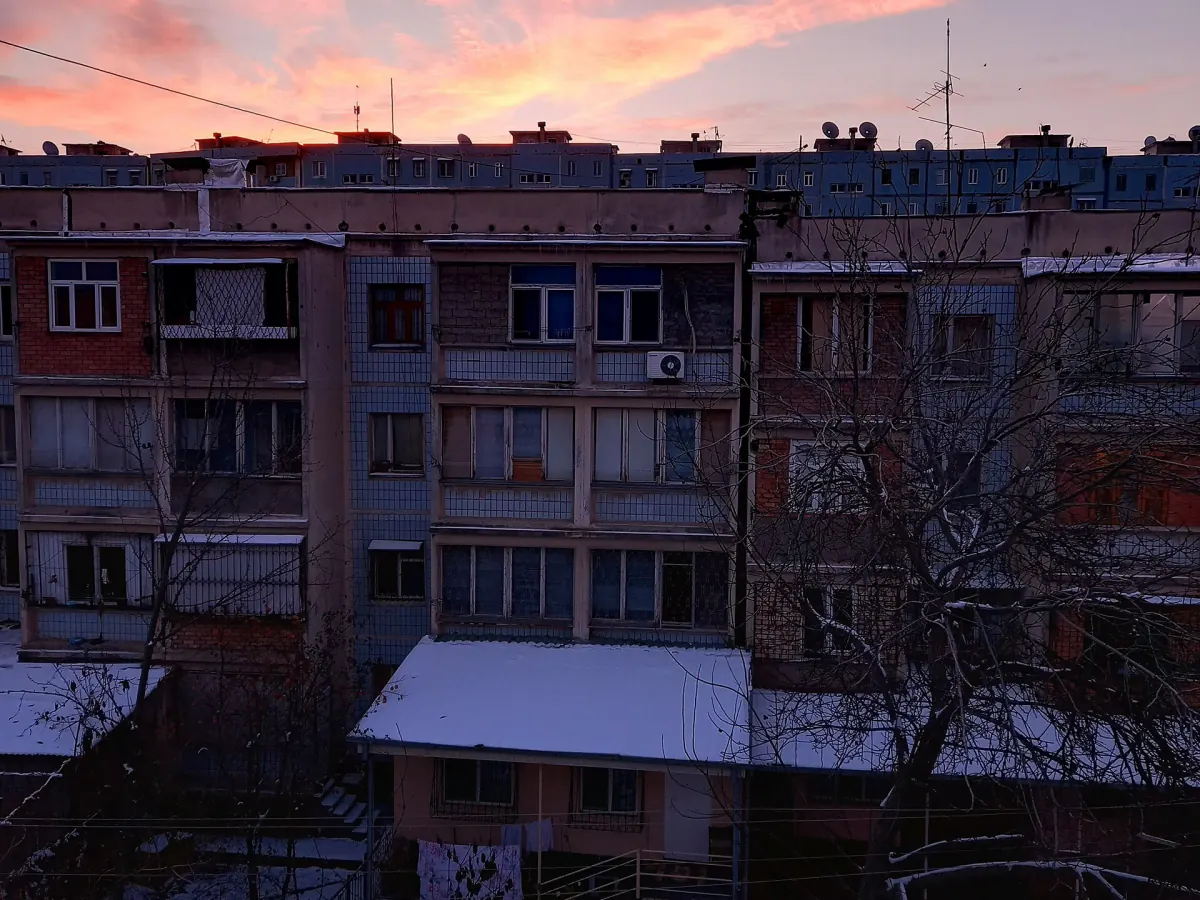
Winter has the opposite problem. There is plenty of night, often twelve hours from Isha to Fajr, but Fajr now sits right next to breakfast and the commute. In Nukus on 21 December, Fajr comes at about 07:00 and sunrise at 08:28, in the middle of getting children to school.
The good news is that the window is wide: from Fajr until sunrise there is well over an hour. Pray before you leave the house, not in a rush at the door. If you wake early anyway, the dark winter morning is a gift: time for Qur’an, for a cup of tea in the quiet, or for a real breakfast with the family.

You do not have to track any of this by hand. Safa recalculates Fajr for your exact location every day, on the phone itself and without the internet, so the alarm quietly follows the Sun through the year. What it cannot do is go to bed for you.
So tonight, look up tomorrow’s Fajr, count back seven hours, and see what time that tells you to be asleep. In June the answer will be uncomfortable. That is the point: it is easier to rearrange an evening than to fight the Sun.
Sources
- NOAA Global Monitoring Laboratory — Solar calculation details (the formulas used here)
- Praytime.uz — prayer times according to the Muslim Board of Uzbekistan’s timetable
- Axial tilt — Wikipedia
- Twilight — Wikipedia (duration by latitude and season)
- Equation of time — Wikipedia
- Watson et al., 2015 — Recommended amount of sleep for a healthy adult, Sleep 38(6)
- Brooks & Lack, 2006 — A brief afternoon nap following nocturnal sleep restriction: which nap duration is most recuperative?, Sleep 29(6)
- Sahih al-Bukhari 6279 — sunnah.com
- Qur’an 6:96 — quran.com
- Photos: cover — NatalieChunina, Wikimedia Commons, CC BY-SA 4.0; Samuel Dunn’s chart — New York Public Library, Wikimedia Commons, public domain; winter sunrise — Anvarov Bobur Baxtiyor o‘g‘li, Wikimedia Commons, CC BY-SA 4.0; morning in Fergana — Muharramxon, Wikimedia Commons, CC BY 4.0.
More to read


