Your morning starts the night before
Waking for Fajr is decided in the evening: how long you sleep, when you drink your last tea, and what an early night meant in the sunnah.
On a June night in Tashkent, Isha comes in at about 21:45. Fajr comes in at about 03:05. Between the two there are roughly five hours and twenty minutes — and that is before anyone has washed the dishes, answered a message or scrolled through the news.
In December the same gap is almost twelve hours. Same city, same alarm, two completely different problems. Which is why waking for Fajr is not really a morning skill. It is decided the evening before — by what time you lie down, what you drank at five, and what your hands were holding at eleven.
How much sleep is enough?
In 2015 the American Academy of Sleep Medicine and the Sleep Research Society reviewed the evidence together and agreed that adults need seven hours or more a night on a regular basis. The US National Sleep Foundation, the same year, put the healthy range for adults at seven to nine hours.
Why not six? A well-known experiment answers that. In 2003, Hans Van Dongen and David Dinges at the University of Pennsylvania kept volunteers on six hours in bed for two weeks. By the end, their attention and reaction times had slipped about as far as people kept awake for one or two whole nights. The unsettling part: they rated themselves only slightly sleepy. Short sleep hides its own cost.
This is the honest arithmetic of Fajr. If you sleep at one and the alarm rings at four, no alarm and no intention can pay back the missing hours. The morning struggle you feel is often not laziness. It is a debt.
Count backwards from Fajr
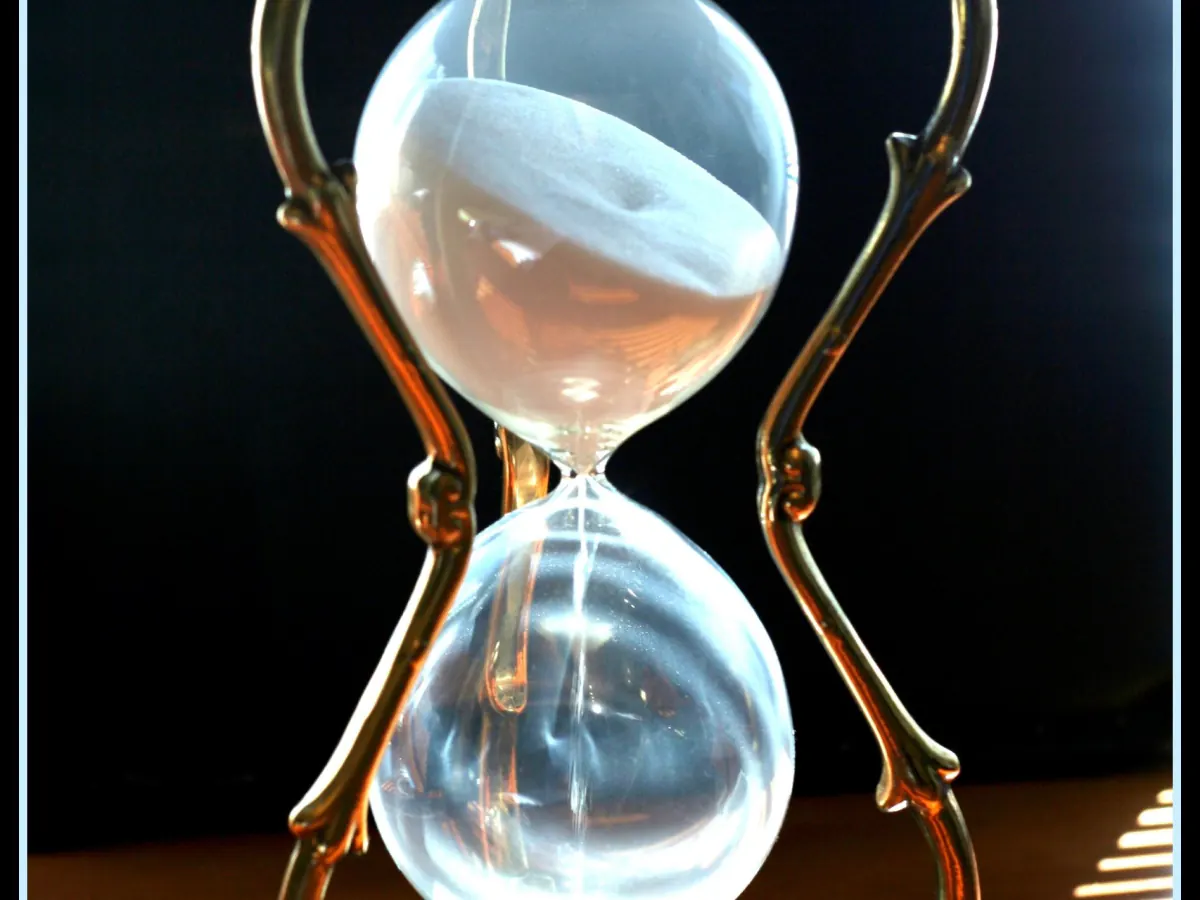
Most of us plan the morning and let the evening happen. Try the opposite. Take tomorrow’s Fajr time, choose when you want to be up, then subtract seven to seven and a half hours. That is not when you start getting ready. That is when you want to be asleep.
- Late September in Tashkent: Fajr is about 04:50, so you want to be up at 04:40.
- Seven and a half hours earlier is 21:10 — asleep by then.
- Most people need ten to twenty minutes to fall asleep, so lights out at about 20:50.
- Isha that evening is around 19:40 — there is time to pray, eat lightly and wind down.
You may have heard the advice to time your sleep in 90-minute cycles. It holds a grain of truth: sleep does run in cycles that average around 90 to 110 minutes, and waking from light sleep feels easier than waking from deep sleep. But the length varies from person to person and from night to night, so treat it as a rough guide, not a formula. Total hours matter far more.
And the short nights of summer? When the gap between Isha and Fajr falls to five or six hours, one long night is simply not possible. Many people split their rest: they sleep soon after Isha, pray Fajr, and take a short midday rest — the old qaylula, which has its own article on this blog.
An old sunnah: an early night
None of this is new. The Companion Abu Barza al-Aslami described how the Prophet ﷺ spent his evenings, and one detail is striking in its simplicity.
Allah’s Messenger ﷺ disliked sleeping before the Isha prayer and talking after it.
— Sahih al-Bukhari 568; see also 599 (translation of the meaning).
Commentators have long explained the reason in practical terms: a long evening of talk steals the night, and a stolen night puts the dawn prayer at risk. Al-Bukhari himself placed nearby chapters allowing talk after Isha that has a purpose — learning, a guest, one’s family. So the point is not silence. The point is that the evening has a direction, and it points towards sleep.
وَجَعَلْنَا نَوْمَكُمْ سُبَاتًا
“And We made your sleep a rest” (translation of the meaning).
Qur’an 78:9
The tea you drank at five
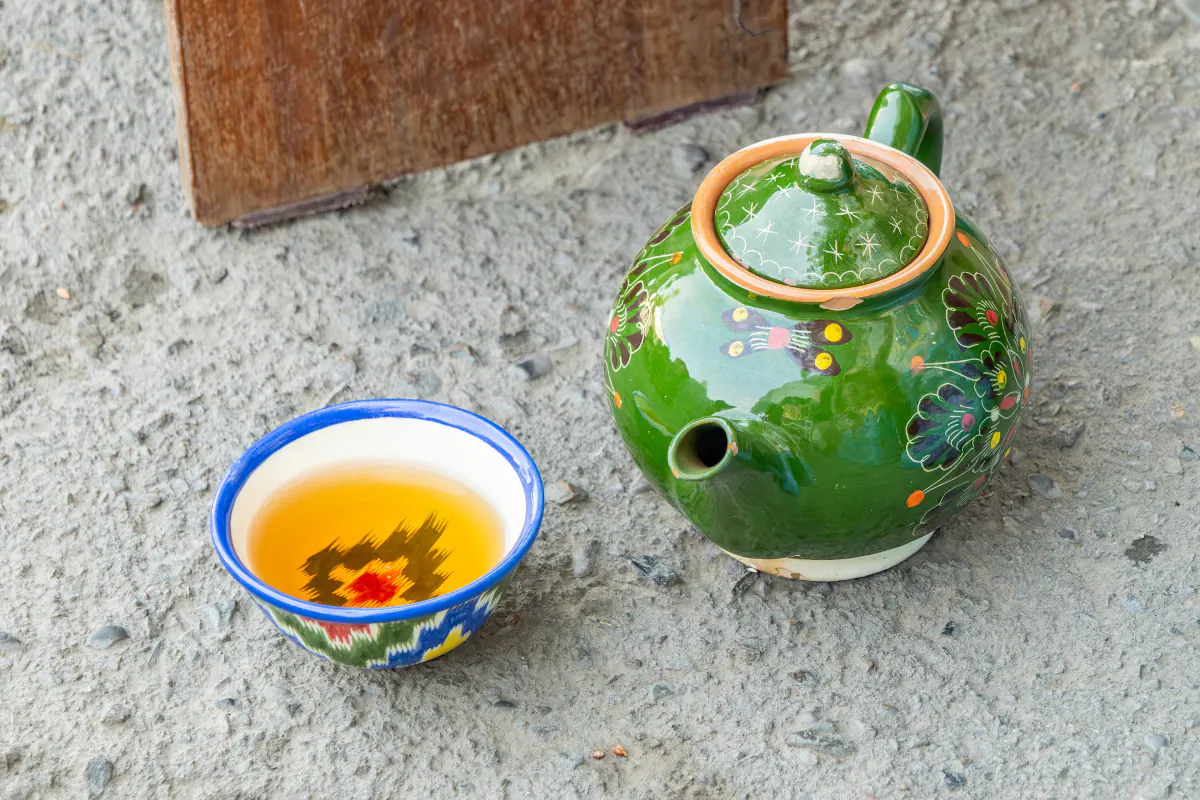
Caffeine blocks adenosine, a chemical that slowly builds up in the brain during the day and makes us sleepy. On average the body clears half of the caffeine you drink in about five hours, though for some people it takes as little as an hour and a half and for others more than nine.
In 2013, Christopher Drake and colleagues at Henry Ford Hospital in Detroit gave volunteers a large dose of caffeine — about as much as four cups of coffee — at bedtime, three hours before, or six hours before. Even the six-hour dose cut measured sleep by more than an hour, and the sleepers themselves barely noticed. Green tea has far less caffeine than coffee, but several strong piyolas through the evening add up.
The phone, the weekend and the clock inside you
Screens in the last hour before sleep deserve their own article, and this blog has one. One study is worth mentioning here: in a small randomised trial published in 2020, adults who simply stopped using their phone in the thirty minutes before bed fell asleep about twelve minutes faster and slept about eighteen minutes longer after four weeks. It was a small study, but the cost of trying is zero.
The weekend matters too. In 2006 Marc Wittmann, the chronobiologist Till Roenneberg and their colleagues gave a name to the gap between our workday and weekend sleep times: social jetlag. Staying up late on Saturday shifts the body clock as if you had flown a few time zones west — and Sunday night, and Monday’s Fajr, pay for the trip. A steady bedtime, seven days a week, is the quiet habit behind most people who wake easily.
An evening that leads somewhere
Here is a routine built backwards from sleep. Adjust the times to your own Fajr; keep the order.
- Six hours before sleep: the last coffee or strong tea.
- Sixty minutes before: the phone goes to charge outside the bedroom. Check the alarm once, now, and then stop checking.
- Forty-five minutes before: lights down. Lay out tomorrow’s clothes and the prayer mat.
- Thirty minutes before: no screens. Reading, dhikr, a quiet word with family.
- At bedtime: wudu, lying on the right side and the bedtime dua the Prophet ﷺ taught al-Bara’ ibn Azib (Sahih al-Bukhari 247). Then an intention for Fajr, and sleep.
Safa follows the real Fajr time for your location every day, even without internet, so the first number in this routine is always in front of you. Everything else is yours to set.
Sleep is not Fajr’s opponent; it is its precondition. The person who slept well does not fight in the morning. They simply get up.
Sources
- Watson et al., 2015 — Recommended amount of sleep for a healthy adult (AASM & SRS), Sleep
- Hirshkowitz et al., 2015 — National Sleep Foundation’s sleep time duration recommendations, Sleep Health
- Van Dongen et al., 2003 — The cumulative cost of additional wakefulness, Sleep
- Patel, Reddy, Shumway & Araujo — Physiology, Sleep Stages, StatPearls (NCBI Bookshelf)
- Sahih al-Bukhari 568 and 599 — sunnah.com
- Sahih al-Bukhari 247 — the bedtime dua, sunnah.com
- Qur’an 78:9 — quran.com
- Caffeine withdrawal (half-life of caffeine), StatPearls (NCBI Bookshelf)
- Drake et al., 2013 — Caffeine effects on sleep taken 0, 3, or 6 hours before going to bed, Journal of Clinical Sleep Medicine
- He et al., 2020 — Effect of restricting bedtime mobile phone use on sleep, PLOS ONE
- Wittmann, Dinich, Merrow & Roenneberg, 2006 — Social jetlag, Chronobiology International
- Photos: cover — Giorgio Montersino, Wikimedia Commons, CC BY-SA 2.0; hourglass — John Morgan, Wikimedia Commons, CC BY 2.0; crescent — Vita86, Wikimedia Commons, CC BY-SA 3.0; tea — ElenaLitera, Wikimedia Commons, CC BY-SA 4.0.
More to read


