
Wudu at dawn: water, cold and coming awake
What the Prophet ﷺ said about the water of wudu, what cold does to a waking body — and why warm water is perfectly fine.
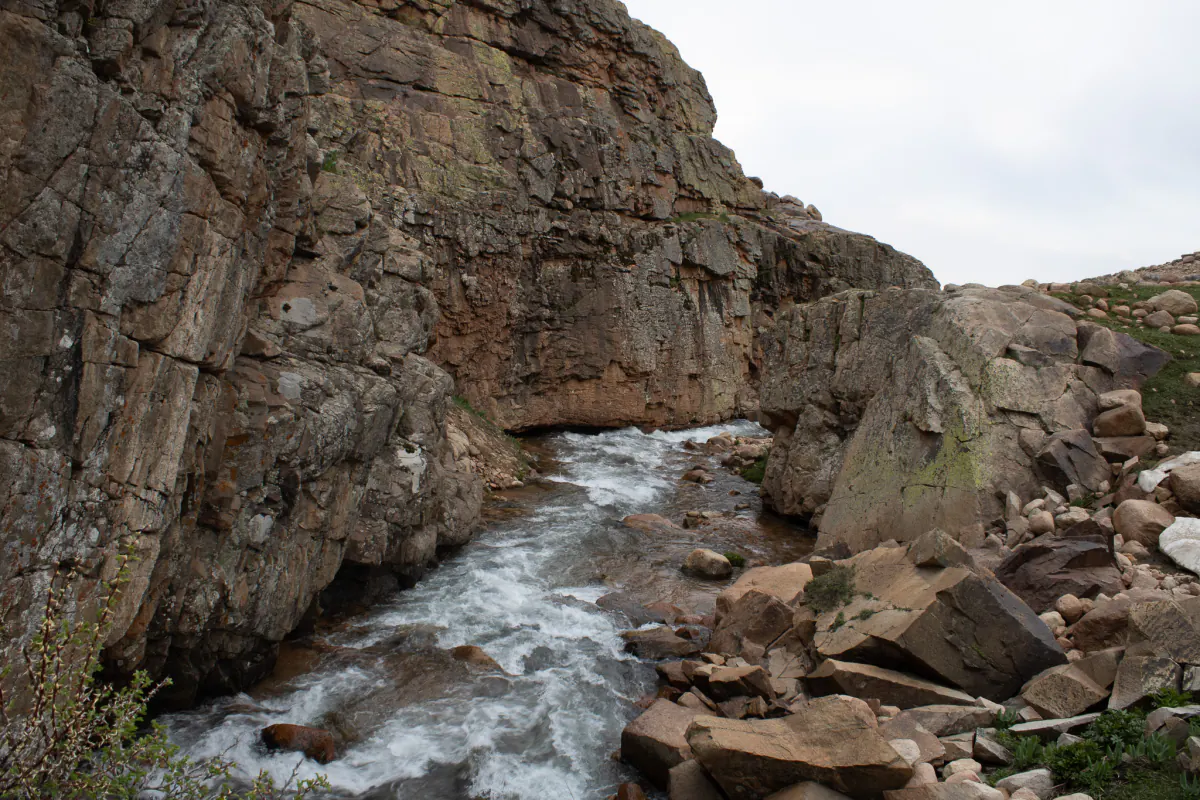
A January morning in Tashkent. The flat is dark, the floor is cold, and the water from the tap feels like it came straight off the Chimgan snow. You cup your hands, bring the first handful to your face — and for a second your breath catches.
Muslims have been doing this before dawn for fourteen centuries: wudu, the washing before prayer. It is a religious act first. But it also happens to be one of the most effective ways of coming awake that a person can reach in the dark. This article looks at both — what the tradition says about the water, and what science can and cannot say about the cold.
What the water carries away
The Qur’an sets out wudu in a single verse (5:6): wash the face, the arms to the elbows, wipe the head, wash the feet to the ankles. The same verse ends with a sentence worth remembering on a cold morning:
مَا يُرِيدُ ٱللَّهُ لِيَجْعَلَ عَلَيْكُم مِّنْ حَرَجٍ وَلَـٰكِن يُرِيدُ لِيُطَهِّرَكُمْ وَلِيُتِمَّ نِعْمَتَهُۥ عَلَيْكُمْ لَعَلَّكُمْ تَشْكُرُونَ
“Allah does not intend to make difficulty for you, but He intends to purify you and complete His favour upon you, so that you may be grateful.” (translation of the meaning)
Qur’an 5:6
The Prophet ﷺ described what happens in those few minutes in a way that turns a chore into something else entirely:
“When a Muslim — or a believer — performs wudu and washes his face, every sin he looked at with his eyes leaves his face with the water, or with the last drop of water. When he washes his hands, every sin his hands did leaves them with the water… When he washes his feet, every sin his feet walked towards leaves with the water… until he comes out cleansed of sins.” (translation of the meaning)
— Sahih Muslim 244, narrated by Abu Hurayra
Notice how physical the image is: face, hands, feet — each washed of what it did. Whatever else wudu is, it is a clean line drawn between the night and the day.
What cold water does to a waking body
Something measurable happens in that second. When cold water touches the face — especially the forehead and the skin around the eyes — nerves in the face signal the brainstem, and the heart briefly slows down. Physiologists call it the diving reflex, and we share it with seals and whales. It is strongest when you hold your breath with your face in cold water; a splash from the tap triggers a much milder version.
So the first effect of cold water on the face is, surprisingly, calming rather than alarming. The alerting effect comes from the cold on the skin more broadly. In a well-known 2000 study, Czech researchers led by Petr Šrámek had young men sit in water up to the neck for an hour. At 14 °C, their blood levels of noradrenaline — a chemical messenger the body uses to raise alertness and attention — rose by about 530 percent.
Now the honest part. That was an hour of whole-body immersion, not a few handfuls of water on the face and arms. Nobody, as far as we know, has measured what wudu itself does to hormones, and we should not pretend otherwise. What we can say is modest and still useful:
- Cold water on the skin is a strong, sharp signal that competes with drowsiness. Most people feel it wake them, and physiology gives good reasons why.
- The grogginess right after waking has a name too — sleep inertia. A 2000 review by Patricia Tassi and Alain Muzet describes it as a short period of lowered alertness that can follow even a full night’s sleep. Getting up, moving and washing all help you through it.
- What wudu does not do is anything miraculous for your health. Claims online about cold water “boosting immunity” or “burning fat” go far beyond what a morning wash can support.
Wudu in hardship — and why it doesn’t have to be cold
“Shall I not tell you of something by which Allah erases sins and raises ranks?” They said: “Yes, Messenger of Allah.” He said: “Completing wudu thoroughly despite difficulty, taking many steps to the mosques, and waiting for the next prayer after a prayer. That is steadfast guarding (ribat).” (translation of the meaning)
— Sahih Muslim 251, narrated by Abu Hurayra
Imam an-Nawawi, in his commentary on Sahih Muslim, explained that the “difficulty” here includes severe cold and bodily pain. The reward is for doing wudu fully and carefully when it is hard — not for looking for hardship. Nothing in Islam requires cold water. Warm water is perfectly valid for wudu, and the verse above says plainly that difficulty is not the goal.
So if cold water makes an elderly parent’s joints ache, or makes a child cry, warm it. If you want the waking splash, you can still let the last handful on your face be cool. Both are within the tradition.
A gentle order for dawn
The practical idea is simple: make wudu the very first thing you do after getting up — before the phone, before the kitchen. It gives the alarm a destination. Here is the order most people in Uzbekistan learn, following the Hanafi school:
- Make the intention in your heart and say Bismillah.
- Wash your hands up to the wrists, three times.
- Rinse your mouth three times, then your nose three times.
- Wash your face from the hairline to the chin and from ear to ear, three times.
- Wash your arms up to and including the elbows, right then left, three times.
- Wipe your head with wet hands (masah), then your ears.
- Wash your feet up to and including the ankles, right then left, three times.
In the Hanafi school, four of these are obligatory: washing the face, washing the arms with the elbows, wiping at least a quarter of the head, and washing the feet with the ankles. The rest are sunnah. For the details — what breaks wudu, what to do with a bandage — the imam of your mosque is the right person to ask.
If you use Safa, one of the ways to switch off the alarm is to scan a barcode or QR code on an object in another room. Some people put that object by the sink — a bottle of soap, a jar on the shelf — so the only way to silence the alarm already leads to the water.

None of this makes the first handful of water any warmer in January. But it helps to know what that small shock is: a reflex older than our species, a signal the body understands, and — in the words of the Prophet ﷺ — a washing away of more than sleep.
Sources
- Qur’an 5:6 — quran.com
- Sahih Muslim 244 — sunnah.com
- Sahih Muslim 251 — sunnah.com
- An-Nawawi, commentary on Sahih Muslim — chapter on completing wudu despite hardship (Arabic)
- Godek & Freeman — Physiology, Diving Reflex, StatPearls (NCBI Bookshelf)
- Šrámek et al., 2000 — Human physiological responses to immersion into water of different temperatures, European Journal of Applied Physiology
- Tassi & Muzet, 2000 — Sleep inertia, Sleep Medicine Reviews
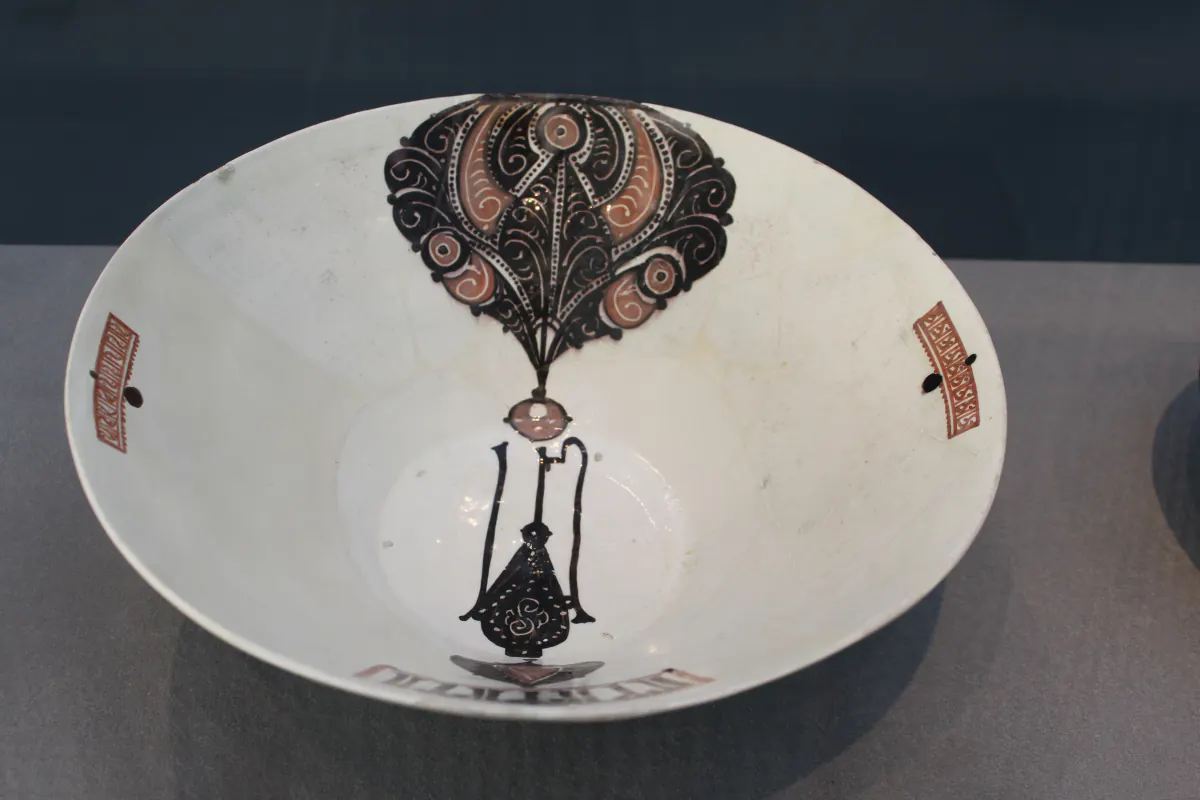
- Photos: cover (wudu area, Jame Masjid Yokohama) — KQuhen, Wikimedia Commons, CC BY-SA 4.0; Ugam-Chatkal river — Humoyun Mehridinov, Wikimedia Commons, CC BY-SA 4.0; bowl with basin and ewer, Louvre — Faqscl, Wikimedia Commons, CC BY-SA 4.0; Mosque of ‘Amr ibn al-‘As — Nan deko, Wikimedia Commons, CC BY-SA 3.0.
More to read


