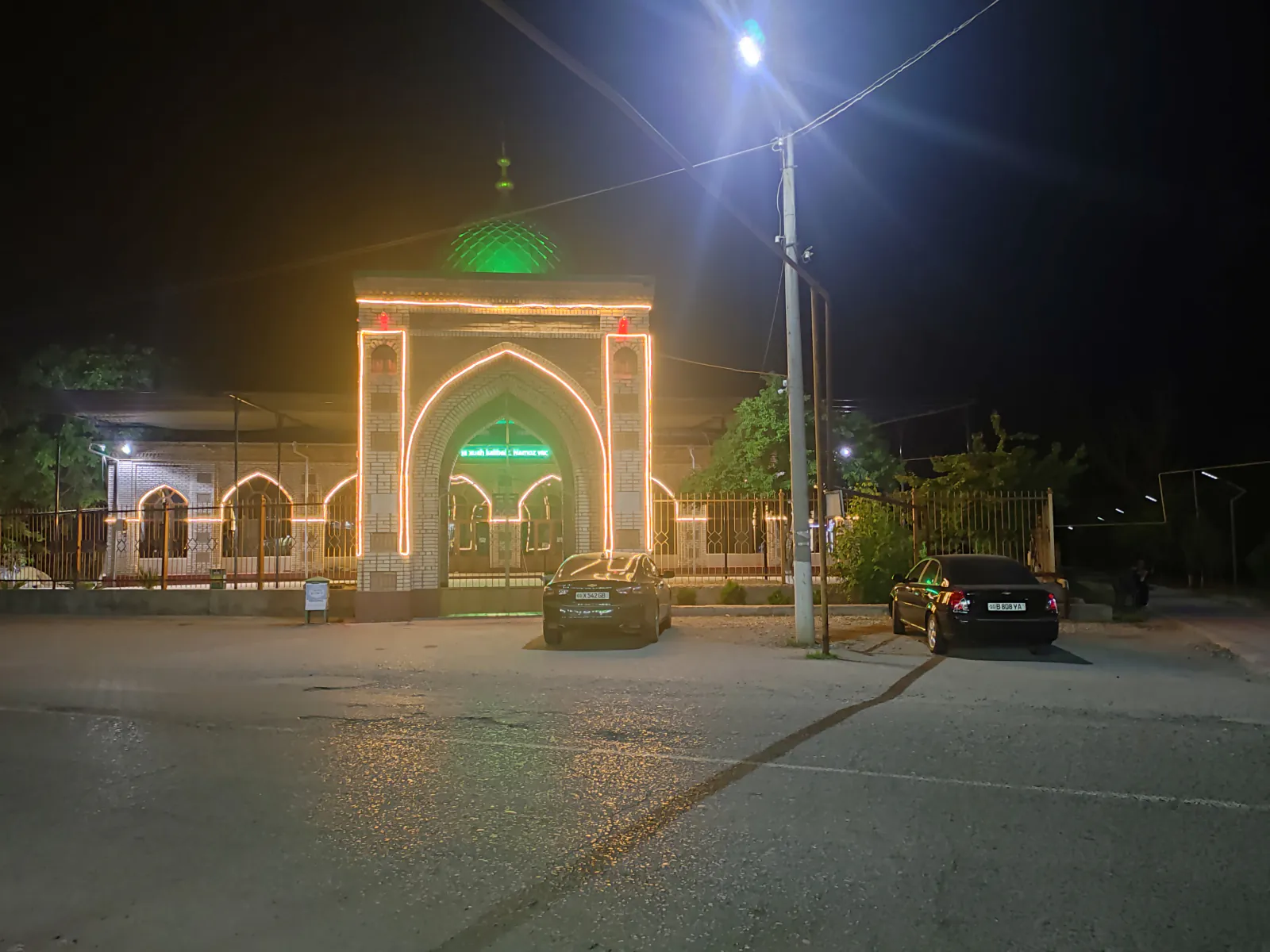
Walking to the mosque in the dark
A promise of light for the steps before dawn, what science says about a daily walk, and how to make the Fajr walk safely.
It is a little after five on an autumn morning in a Tashkent mahalla. The street is so quiet you can hear the water in the ariq. A gate creaks, and an old man steps out in a warm chopon, a torch in one hand. At the end of the street the mosque windows are already lit, and a green glow sits on the little dome like a lamp left on for guests.
He walks slowly, greets a neighbour who has come out of the next gate, and they go on together. Nobody hurries. In a few minutes the street will be empty again, and in half an hour the same men will walk back as the sky over the rooftops turns from ink to grey. It is one of the oldest walks in any Muslim town, and one of the least noticed.
Glad tidings for the dark steps
“Give glad tidings to those who walk to the mosques in the darkness, of complete light on the Day of Resurrection.” (translation of the meaning)
— Sunan Abi Dawud 561 (graded sahih by al-Albani) and Jami‘ at-Tirmidhi 223 (graded sahih by Darussalam), narrated by Buraydah
There is a lovely symmetry in the promise. The walk happens in darkness, and the reward is light. It speaks to exactly the two prayers when the streets are dark: Isha at night and Fajr before dawn. These are also the two prayers people find hardest to attend.
Other narrations count the steps themselves. Abu Hurairah reported that when a person purifies himself at home and walks to one of the houses of Allah to perform an obligatory prayer, one of his steps wipes away a sin and the other raises him a degree (Sahih Muslim 666, translation of the meaning). And Uthman ibn Affan reported that whoever prays Fajr in congregation, it is as if he had prayed the whole night (Sahih Muslim 656, translation of the meaning).
Whether a person should pray at the mosque or at home, and how that differs for men and women, is a question of fiqh with its own details; your local imam is the right person to ask. This article is about the walk itself, and what it gives to anyone who takes it.
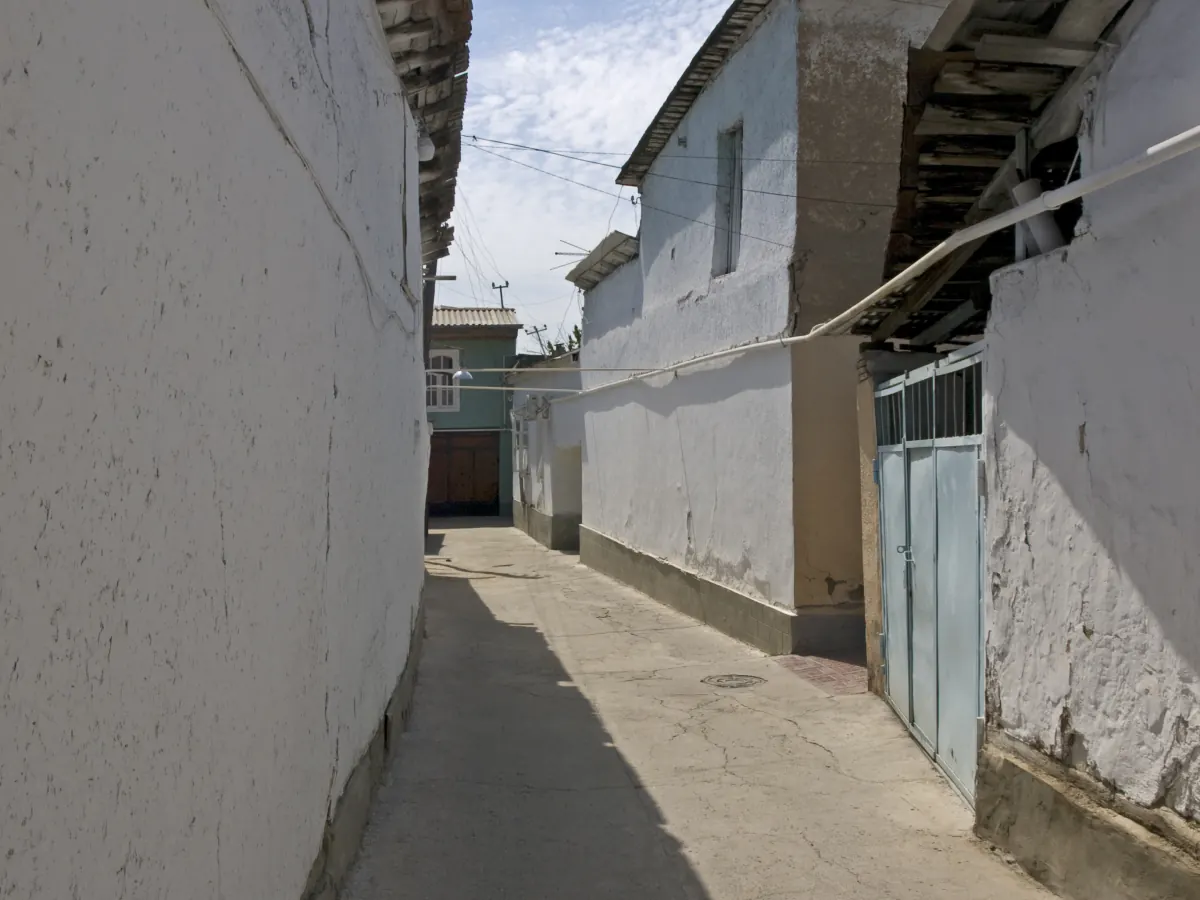
What a daily walk does for the body
For decades the magic number was 10,000 steps a day, a figure that began as a marketing slogan for a Japanese pedometer in the 1960s. In 2022 a team led by Amanda Paluch at the University of Massachusetts Amherst tested it properly. They combined data from 15 studies around the world, covering 47,471 adults who wore step counters and were then followed for about seven years.
People in the most active quarter, around 10,900 steps a day, had a 53 percent lower risk of dying during the study than those in the least active quarter, around 3,500 steps. Even the second quarter, near 5,800 steps, had a 40 percent lower risk. The benefit levelled off at about 6,000 to 8,000 steps for adults over sixty, and 8,000 to 10,000 for younger adults.
Two cautions. This kind of study shows an association, not proof: people who walk more may also be healthier for other reasons. And the numbers describe whole days, not one walk. But they make a point that matters here. A walk to the mosque and back, ten minutes each way at an easy pace, adds roughly two thousand steps. Twice a day, at Fajr and Isha, that is a large share of what a sixty-year-old needs.
Light, mood and the walk home
Before Fajr it is dark, so the walk there gives you almost no daylight. The walk home is different. In Uzbekistan the sun rises more than an hour after Fajr begins, and by the time you leave the mosque the sky is often turning pale. That early twilight is the first light your eyes see that day, and the body’s internal clock uses morning light to set its rhythm.
In a 2021 study of more than 400,000 adults in the UK Biobank, Angus Burns, Sean Cain and colleagues found that each extra hour spent outdoors in daylight was linked to lower odds of depression, easier getting up in the morning, less tiredness and fewer insomnia symptoms. Again, that is a link, not proof. Movement helps too: a 2022 review in JAMA Psychiatry by Matthew Pearce and colleagues found that adults who did the equivalent of about two and a half hours of brisk walking a week had a 25 percent lower risk of depression, and even half that amount was linked to 18 percent lower risk.
The mahalla before dawn
Numbers cannot describe what the walk feels like. The air before dawn is the cleanest of the day. You notice things you never see at noon: the smell of wet leaves, a cat crossing the road, a light going on in a kitchen where someone is putting the kettle on. The mosque, lit up in a dark street, looks like the only place in the city that is fully awake.
Inside, the rows are shorter than at Juma, and everyone knows everyone. The old men are almost always there first. Many of them have walked the same street to the same mosque for forty years, through snow and summer, and their greeting at the door is part of the prayer’s welcome. Afterwards some stay for tea; most simply walk home in the grey light, a little lighter than when they came.
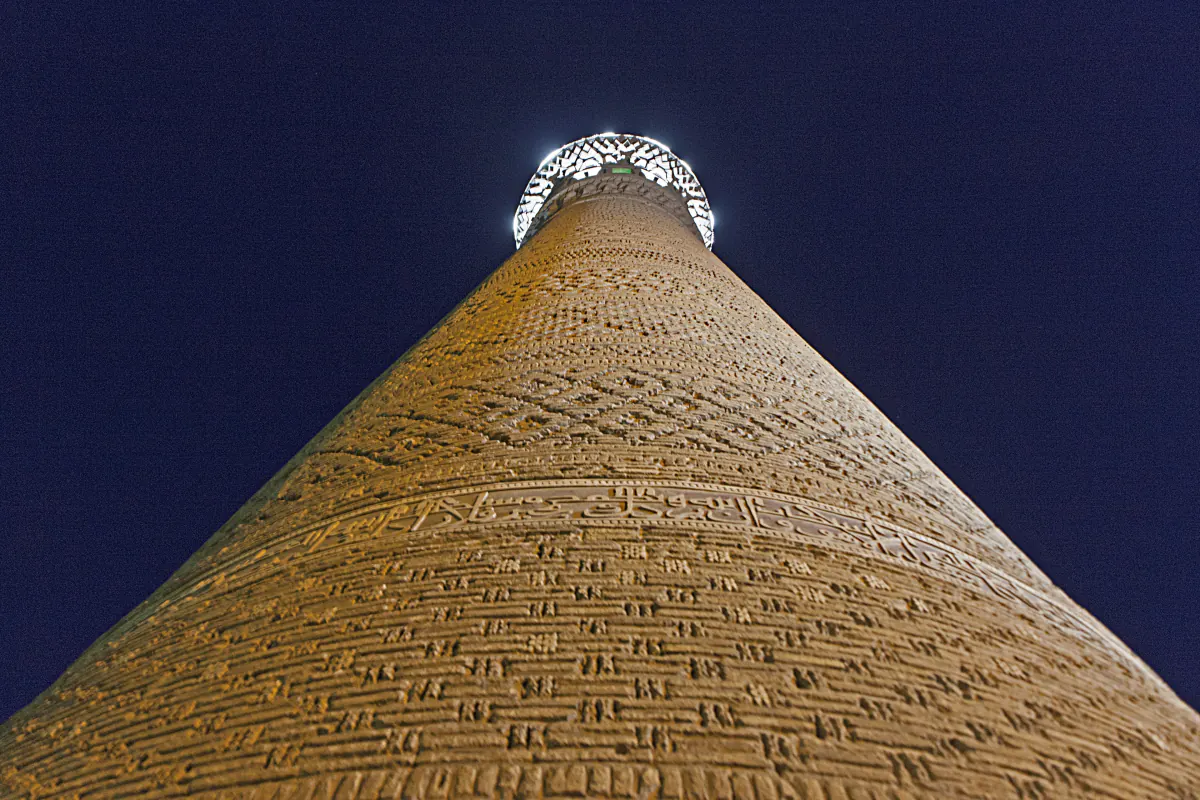
Walking safely in the dark
A walk in the dark carries real risks, mainly from traffic and from uneven ground. A driver sees a person in dark clothes much later than you think. A few habits make a big difference:
- Be seen: wear something light-coloured, or add a reflective strip to your coat or bag. Carry a small torch or use the phone’s light.
- Where there is no pavement, walk facing the oncoming traffic, so you can see the cars and step aside.
- Cross where it is lit, and never assume a driver has seen you.
- Watch your feet: broken asphalt, open ariq channels and, in winter, ice are the usual causes of falls. Good shoes matter more than speed.
- Go together: a neighbour on the same street is company, safety and encouragement on the mornings you would rather stay in bed.
Safa’s alarm has a mission that asks you to walk a number of steps before it stops ringing, which is a good way to get your legs moving when your head is still asleep. But the best version of that walk has no screen at all: it is the one from your gate to the mosque door.
The walk in the dark is short. Ten minutes there, ten minutes back. But it is one of the few journeys in life where both the destination and every step on the way are counted.
Sources
- Sunan Abi Dawud 561 — sunnah.com
- Jami‘ at-Tirmidhi 223 — sunnah.com
- Sahih Muslim 666 — sunnah.com
- Sahih Muslim 656 — sunnah.com
- Paluch et al., 2022 — Lancet Public Health, daily steps and mortality00302-9)
- Burns et al., 2021 — Journal of Affective Disorders, outdoor light, mood and sleep
- Pearce et al., 2022 — JAMA Psychiatry, physical activity and depression
- Photos: cover — Axrorbek Sobirov, Amir Hamza mosque at night, Wikimedia Commons, CC BY 4.0; old city lane — Ymblanter, Wikimedia Commons, CC BY-SA 4.0; Kalon minaret — Davide Mauro, Wikimedia Commons, CC BY-SA 4.0
More to read


