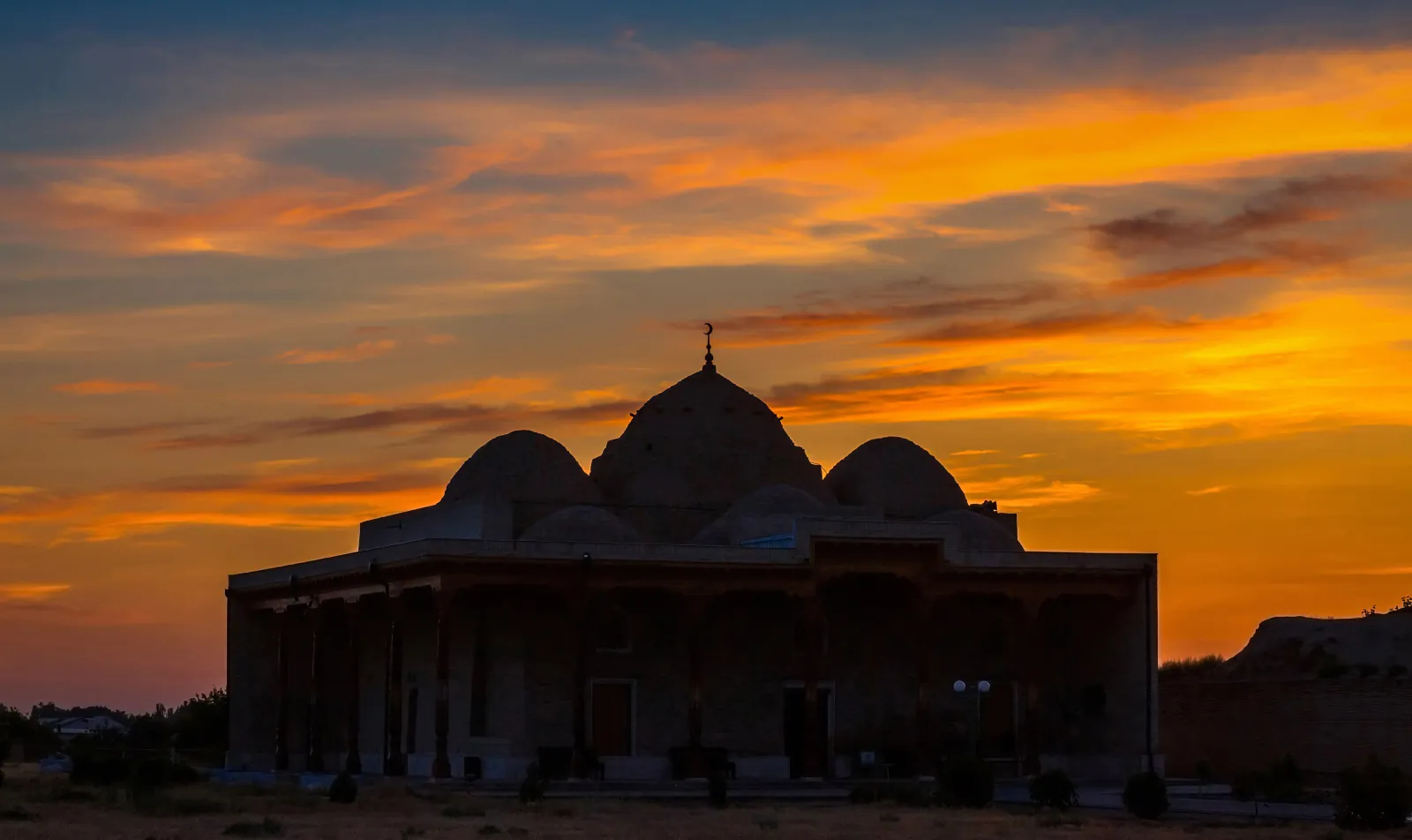
How prayer times are calculated
Every minute on the screen is a sun angle. The five times, the 15.5° of the O‘zMI method, and why your mosque may still differ by a minute or two.
On 22 September 2026 the official O‘zMI timetable for Tashkent reads: Bomdod 04:51, sunrise 06:10, Peshin 12:16, Asr 16:32, Shom 18:25, Xufton 19:39. Safa shows the same six times, to the minute. It did not download them from anywhere. Your phone worked them out itself, from the date and where you are standing.
That is why the times work with no internet at all — on a plane, in the mountains, in a village with no signal. It also means there is arithmetic behind every minute. Here is how that arithmetic works, and why a mosque’s timetable can still differ from an app by a few minutes.
إِنَّ ٱلصَّلَوٰةَ كَانَتْ عَلَى ٱلْمُؤْمِنِينَ كِتَـٰبًا مَّوْقُوتًا
“Indeed, prayer has been decreed upon the believers at specified times” (translation of the meaning).
Qur’an 4:103
Five times, written in the sky
Every prayer time is tied to something the sun does. The Qur’an and the Sunnah describe these moments by what people could see; astronomy simply turns them into numbers.
- Bomdod (Fajr) begins with the true dawn — the first pale light that spreads along the horizon while the sun is still well below it.
- Peshin (Dhuhr) begins just after the sun passes its highest point of the day, called zawal.
- Asr is measured by shadows. For most schools it begins when an object’s shadow equals its own length (plus the short shadow it had at noon). In the Hanafi school, followed in Uzbekistan, it begins when the shadow reaches twice the object’s length (again plus the noon shadow).
- Shom (Maghrib) begins at sunset, when the upper edge of the sun disappears. Astronomers place that moment at 0.833° below the horizon, because air bends sunlight and we still see the sun after it has geometrically set.
- Xufton (Isha) begins when the glow of evening twilight has gone. Scholars differ on whether that means the red glow or the white glow that follows it.
The time of the morning prayer is from the appearance of dawn, as long as the sun has not risen.
— Sahih Muslim 612 (translation of the meaning)
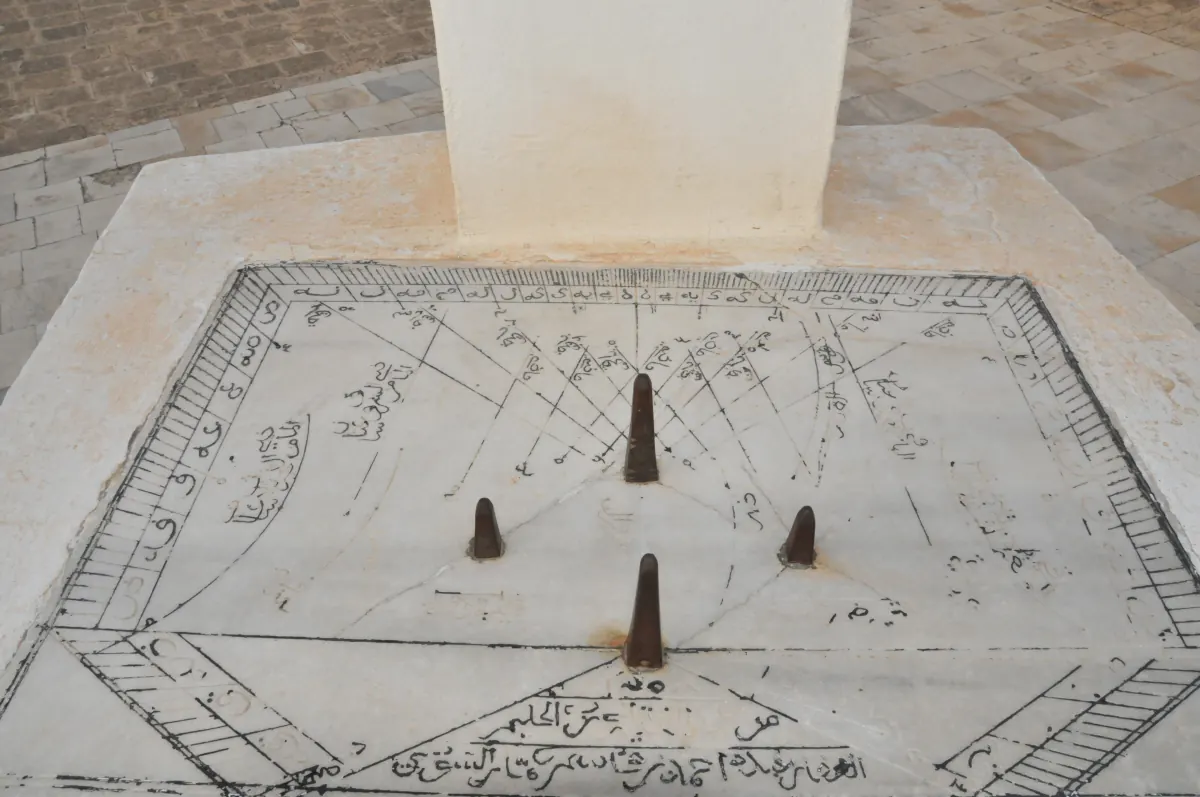
The shadow rule makes a real difference. In Tashkent in late June, the Hanafi Asr comes about an hour and a quarter after the time the other schools use; in December the gap is still more than half an hour. So if you ever compare a Tashkent timetable with one made for another school, check the Asr setting first.
Fajr and Isha: an angle below the horizon
Noon, sunrise and sunset are clear events that nobody disputes. Dawn and dusk are different: light grows and fades gradually. To turn “the first light of dawn” into a number, astronomers use the angle of the sun below the horizon. At 6° below, it is still fairly light outside; at 12°, the horizon is barely visible at sea; at 18°, the sky is fully dark.
Before the true dawn there is also a false dawn — a faint, upright cone of light (zodiacal light, sunlight scattered by dust in space) that rises and then fades. The prayer begins with the true dawn, the one that spreads sideways along the horizon.
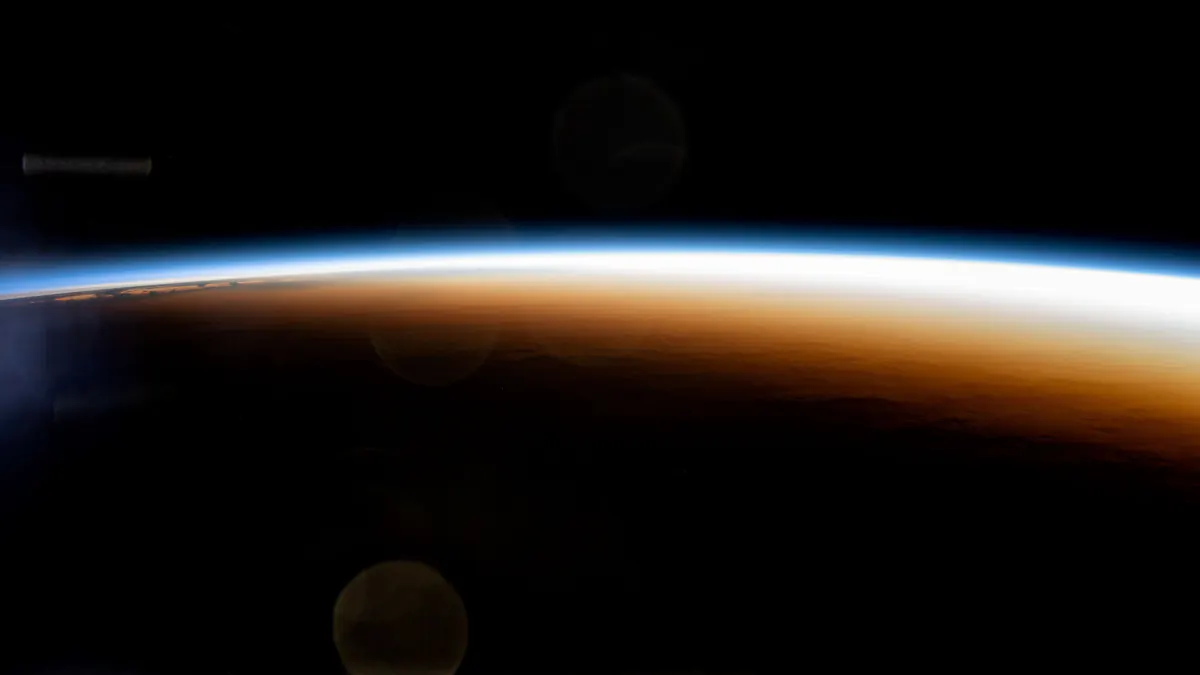
Exactly which angle marks the true dawn is where the calculation methods differ. They are not arguing about astronomy; they are making different judgements about when the dawn becomes visible. Some of the best-known methods:
- Muslim World League: Fajr 18°, Isha 17°.
- Umm al-Qura (Makkah): Fajr 18.5°, Isha 90 minutes after Maghrib.
- Egyptian General Authority of Survey: Fajr 19.5°, Isha 17.5°.
- ISNA (North America): Fajr 15°, Isha 15°.
- Spiritual Administration of Muslims of Russia: Fajr 16°, Isha 15°.
- O‘zMI (Muslim Board of Uzbekistan): Fajr 15.5°, Isha 15.5°, Hanafi Asr, and Maghrib 4 minutes after sunset.
How much does one degree matter? More than you might think, and more in summer. In Tashkent, the difference between 15.5° and 18° is about 14 minutes in September, March or December — but about 23 minutes in late June. In summer the sun sinks below the horizon at a shallow slant, so it takes longer to travel each degree.
Observers keep testing these angles. A 2024 study from Indonesia, by Maskufa and colleagues, measured sky brightness with light meters at several sites and found the true dawn appearing anywhere from about 19° to about 13.6° below the horizon. Darker skies showed the dawn earlier; in places with more light pollution it appeared later. That spread is exactly why different regions settled on different numbers.
The O‘zMI method in Safa
For Uzbekistan, Safa uses the O‘zMI method exactly as islom.uz does: Fajr and Isha at 15.5°, Hanafi Asr, and Maghrib four minutes after sunset. Adding a few minutes of precaution like this is common in prayer timetables. The calculation runs entirely on your phone, so it keeps working offline, every day of the year.
Outside Uzbekistan, Safa suggests the method used in your region — for example the Muslim World League, ISNA or Umm al-Qura — and you can change it in the prayer settings.
Why the mosque may differ by a few minutes
Even with the same method, a mosque’s printed timetable and an app can disagree by a minute or two, sometimes more. Usually there is a simple reason:
- Where exactly. One degree of longitude is four minutes of the sun’s movement. Nukus and Tashkent share a time zone, but Nukus reaches Dhuhr about 38 minutes later. Even across a big city, times shift slightly.
- Precaution. Many timetables add a minute or more of ihtiyot (precaution) to a time, so that no one prays too early.
- Rounding. One source rounds 04:51:40 to 04:52, another shows 04:51.
- Adhan versus congregation. The time on the mosque board may be when the congregation stands up, which is often 15–30 minutes after the time begins.
Why Fajr moves every day
The Earth spins on a tilted axis, so the time of dawn shifts through the year. In Tashkent, Bomdod falls at about 03:03 in mid-June and about 06:24 in early January — more than three hours apart. From one day to the next the change is small, a minute or two, which is why a hand-set alarm feels right for a week and then quietly goes wrong. Safa’s Fajr alarm is recalculated for every single day.
Tonight, look up tomorrow’s Bomdod time, then step outside at that minute if you are awake. Somewhere to the east, very low, the sky will be starting to change. Everything in this article is just a careful way of describing that light.
Sources
- Qur’an 4:103 — quran.com
- Sahih Muslim 612 — sunnah.com
- PrayTimes.org — Prayer times calculation: definitions and methods
- Twilight — Wikipedia
- Maskufa et al., 2024 — Contextualising Fajr Sadiq: response to dawn research findings with the Sky Quality Meter, Mazahib
- islom.uz — prayer times of the Muslim Board of Uzbekistan
- Times for Tashkent other than 22 September were computed with the O‘zMI parameters (15.5°/15.5°, Hanafi Asr, Maghrib +4 min) and standard solar formulas.
- Photos: cover — Kraftabbas, Deggaron mosque at sunset, Navoi region, Wikimedia Commons, CC BY-SA 4.0; dawn from orbit — NASA Johnson Space Center, public domain; sundial in Kairouan — Tab59, Wikimedia Commons, CC BY-SA 2.0; Bukhara — Adam Jones, Wikimedia Commons, CC BY-SA 4.0.
More to read


