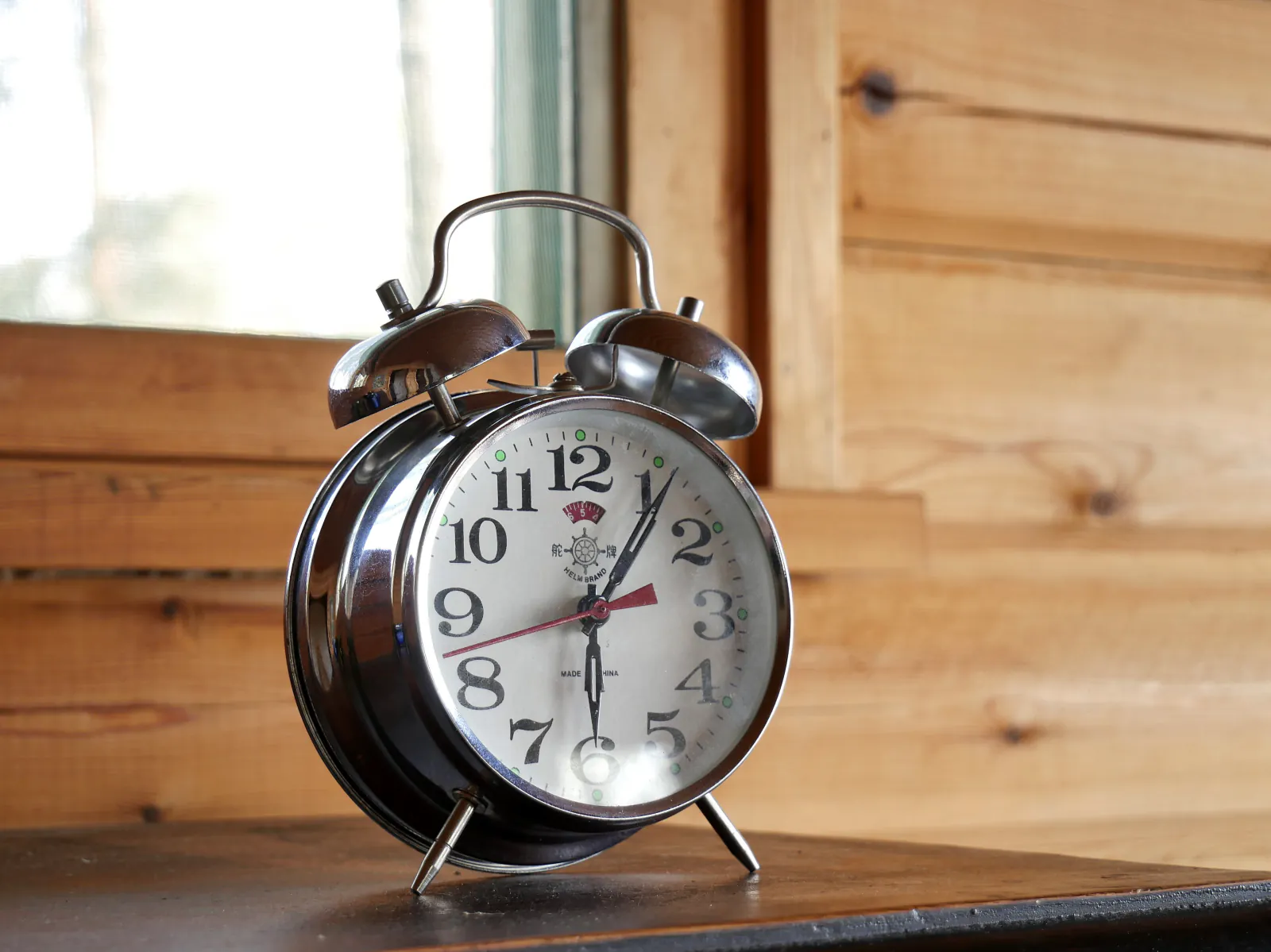
Why Safa asks you to complete a mission
A button pressed half asleep is not waking up. What sleep science says about the first minutes of the morning, and why the mission is proof, not punishment.
In 2006 a team at the University of Colorado woke nine volunteers in a sleep laboratory and immediately gave them a simple test: add up numbers, as fast and as accurately as you can. In the first minutes after waking, their performance was worse than after they had been kept awake for 26 hours straight.
It was a small study, but it captures something everyone has felt. For a few minutes after the alarm, you are not quite you. And that is exactly when an ordinary alarm clock asks you to make a decision.
The brain wakes up in stages
Scientists call this groggy state sleep inertia: a short period after waking when attention, memory and judgement lag behind the fact that your eyes are open. Most of it fades within 15 to 30 minutes, but a 2019 review by Cassie Hilditch and Andrew McHill notes that full recovery can take an hour or longer.
Brain scans show why. In 2002 Thomas Balkin and colleagues used PET imaging, which tracks blood flow in the brain, to watch people wake up. Deep, ancient regions such as the brainstem and thalamus switched on within minutes. The prefrontal cortex — the front of the brain that plans, weighs options and says “no, get up” — took noticeably longer, catching up over the next quarter of an hour.
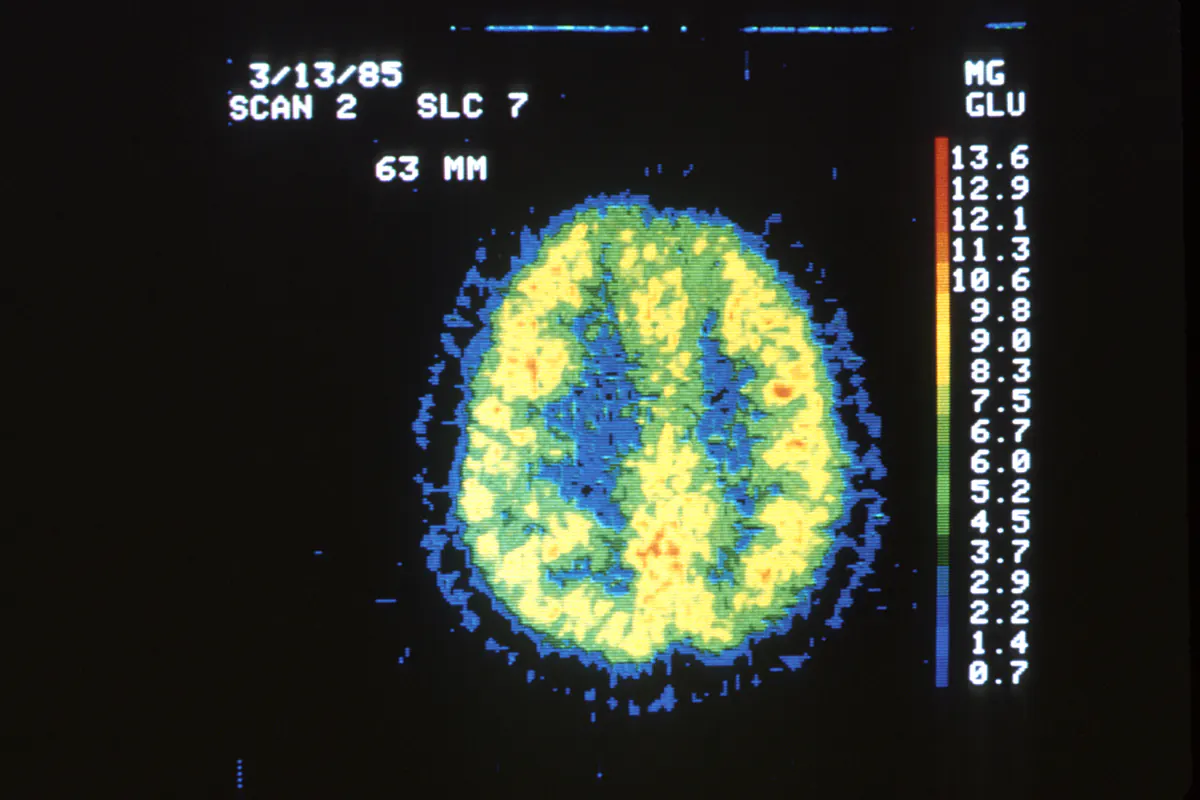
So the part of you that knows why you set a Fajr alarm is the last part to arrive. The hand that reaches for the phone arrives first.
The tap you will not remember
There is a second problem. Memory needs a little time to be written down, and falling asleep interrupts that. In 1997 James Wyatt, Richard Bootzin and colleagues found that people who fell asleep and stayed asleep for ten minutes could barely recall things shown to them in the last four minutes before they dropped off.
That is one way people end up certain the alarm never rang. It did. You switched it off with a hand that was awake enough, and a mind that was not, then slept again, and the memory of it never formed.
To be fair to the snooze button: it is not always the villain. A 2022 survey led by Stephen Mattingly at the University of Notre Dame found that 57% of working adults snooze, and in a 2023 laboratory study by Tina Sundelin and colleagues in Stockholm, 30 minutes of snoozing did not harm habitual snoozers’ thinking after they got up. The difference with Fajr is the clock. The prayer’s time ends at sunrise, and a tap you do not remember can cost the whole window.
What a mission is for
In Safa the alarm has exactly one ordinary off switch: a small mission. It is not a punishment and it does not need to be hard. Its only job is to carry you across the threshold, into a waking you will remember. To finish it, you need the part of the brain that arrives last — numbers, order, attention — or you need to be on your feet.
An honest note: nobody has yet shown in a lab that moving around shortens sleep inertia — Hilditch and McHill list it as an idea still waiting to be tested. What a mission guarantees is simpler and more certain: you cannot finish it asleep.
People fall back asleep for different reasons, so no single mission suits everyone. Safa’s missions fall into three families:
- Missions that need thought — a typed math problem, a memory pairs game, typing a sentence. They start the front of the brain and can be done without leaving the bed.
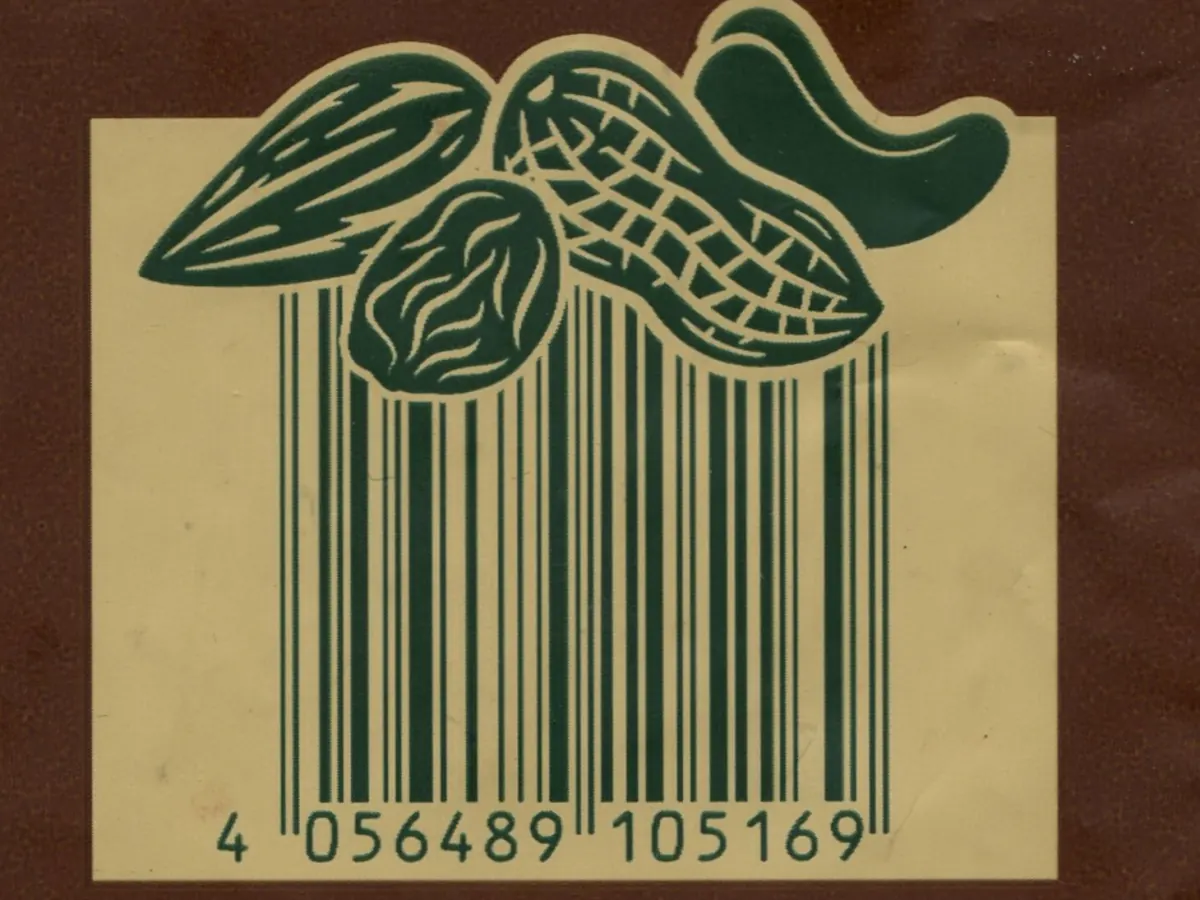
- Missions that need movement — walking a set number of steps, shaking the phone, or scanning the QR code or barcode of an object you registered in advance, say a jar in the kitchen. They put your body upright.
- Missions that need attention — holding a dua, turning to the qibla and holding still, reciting aloud, putting the words of an ayah in order. They start the morning with meaning rather than noise.
“No mission” is also a real choice, for mornings when you trust yourself. And if one mission is not enough, Safa Tong holders can chain up to three.
The way out is always open
This is the rule that matters most, and it is built into the app: an emergency exit is always within reach. A sick child, a phone call, a mission that will not cooperate — no app has the right to trap you. Using the exit costs the streak, because an exit has to be real. But it is always there.
For the same reason, no mission needs the internet or a server. When the alarm rings, your phone may be entirely offline, and everything still works.
Why there are no photo missions
There was once a plan to verify wudu or a running tap from a photo. We dropped it, because the cost of a mistake is too high. In a dim bathroom, on an inexpensive camera, a model that wrongly says “no” leaves a person locked in with a ringing alarm at four in the morning. A check that is not reliable is not a check. Every mission Safa offers can be finished in the dark, and photos or audio never leave your phone.
Tonight
Think about how you usually lose the morning. If you switch the alarm off and sleep on, choose a movement mission and register an object in another room. If you get up but your head stays foggy, choose a math or typing mission. Then press Try it now once, so tomorrow’s screen is a familiar one. The first minutes of the morning belong to sleep inertia. The mission makes sure the next ones belong to you.
Sources
- Wertz et al., 2006 — JAMA
- Balkin et al., 2002 — Brain
- Tassi & Muzet, 2000 — Sleep Medicine Reviews
- Hilditch & McHill, 2019 — Nature and Science of Sleep
- Wyatt et al., 1997 — Sleep
- Mattingly et al., 2022 — Sleep
- Sundelin et al., 2024 (online 2023) — Journal of Sleep Research
- Photos: cover — alarm clock, Santeri Viinamäki, Wikimedia Commons, CC BY-SA 4.0; PET scan — US National Cancer Institute, Wikimedia Commons, public domain; barcode — Adam Harangozó, Wikimedia Commons, CC BY-SA 4.0; North Gate of Itchan Kala — Schneekoala, Wikimedia Commons, CC BY-SA 4.0.
More to read


