
The streak: a chain of small mornings
The number is not the goal. It makes a slow, invisible change visible — and it matters most on the day it breaks.
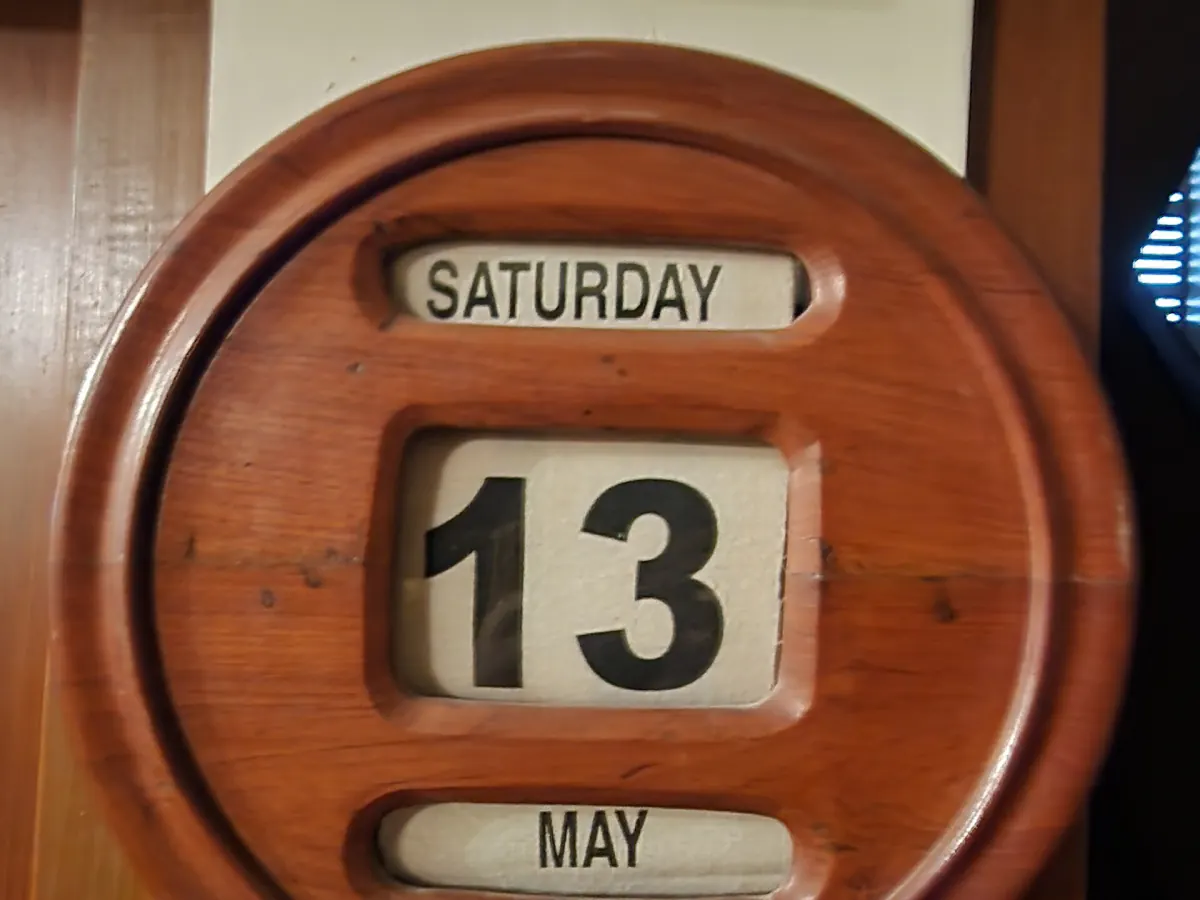
In 2007 a young comedian named Brad Isaac told a story on the website Lifehacker. Years earlier he had caught Jerry Seinfeld backstage at a club and asked for advice. Write every day, Seinfeld supposedly said. Hang a big wall calendar, and for every day you write, cross it out with a red X. After a few days you will have a chain. Your only job is not to break it.
“Don’t break the chain” became one of the most repeated habit tips on the internet. The twist is that Seinfeld himself later said the idea was not his and that he had never really used it. The story may be half legend. It survived anyway, because it names something true: a visible chain makes slow progress visible.
A number for something you cannot feel
Habits change slowly, and that is exactly why the change is hard to notice. The thirtieth morning feels different from the first, but the difference is spread so thinly across the days that you never catch it happening.
Science gives a sense of the timescale. In a study published in 2010, Phillippa Lally and colleagues at University College London asked 96 volunteers to repeat one small daily behaviour — a glass of water with lunch, a short walk — for twelve weeks. On average it took 66 days for the behaviour to feel automatic, with huge differences between people: from 18 days to an estimated 254. That is why 66 is one of the milestones in Safa, alongside 1, 3, 7, 14, 30, 100 and 365 mornings.
Seeing the chain is not a gimmick either. In 2016 the British psychologists Benjamin Harkin, Thomas Webb and colleagues pooled 138 studies involving about 19,000 people. Monitoring your own progress reliably helped people reach their goals, and the effect was stronger when the progress was physically recorded rather than only kept in mind. A streak is exactly that: a small, honest record you do not have to keep in your head.
What counts in Safa, and what does not
Only the Fajr alarm touches the streak. Ordinary alarms for work, class or a meeting are useful, but they are not what this chain is about. Here is how a morning is counted:
- You complete the mission before sunrise — the morning counts and the chain grows.
- You woke before the alarm — tap “I’m awake” in the 15-minute heads-up and do the mission early. The morning counts; the alarm stays quiet.
- You skip a morning in advance — for a journey or an illness. The chain waits for you, up to two skips in any seven days; beyond that a skip counts as a miss.
- You complete the mission after sunrise — the day gets its own mark on the calendar. It is not a failure, but the chain does not continue.
- You take the emergency exit — the chain breaks. That is right: an exit has to be real, or it is not an exit.
And one rule that never bends: no money buys streak progress. Not a day, not a skip, not a restored chain.
The most dangerous thought
Sooner or later the chain breaks. For many people the real damage comes after that, from one sentence: it’s broken anyway. Psychologists know this pattern well.
In a classic 1975 experiment, C. Peter Herman and Deborah Mack gave people on a diet a milkshake before a “taste test” of ice cream. People who were not dieting ate less ice cream after the milkshake, as you would expect. The dieters ate more. Once the rule had been broken, the day felt lost, so why hold back? Herman and his long-time colleague Janet Polivy went on to study this reaction for decades. It is often called the what-the-hell effect.
A streak invites the same trap. After thirty mornings, one miss can feel like losing all thirty. But look again at Lally’s study: missing a single day did not measurably slow the habit down. Your body and your routine remember those thirty mornings. Only the number goes back to zero.
That is why Safa also keeps your longest streak. It is a quiet reminder that you have done this before — and something you have done once is easier the second time.
Small and constant
Long before habit science, the Sunnah pointed in the same direction. Aisha, may Allah be pleased with her, reported the Prophet (peace be upon him) as saying:
The most beloved of deeds to Allah are those done most consistently, even if they are small.
— Sahih al-Bukhari 6464; Sahih Muslim 783 (translation of the meaning)
The same narration in al-Bukhari begins with an instruction to do good deeds properly, sincerely and in moderation. Moderation is the part people forget. A chain built on small, steady mornings lasts longer than one built on heroic effort.
When the number starts doing harm
A streak is a tool, and tools can be misused. If you catch yourself rushing the prayer to protect a number, or dragging yourself up while ill, the number has left its job. Skip the morning, rest, and come back.
A streak is not a measure of worship. It is a counter attached to an alarm clock. Worship is between you and Allah, and no app can grade it.

Tomorrow morning
Don’t aim for 365. Aim for the next milestone — three mornings, then seven. Big numbers arrive on their own when the small ones are taken care of. Tonight, put the phone where you will have to stand up to reach it, and choose a mission you have already tried once. When the chain grows, let it remind you how far you have come. When it breaks, remember two things: the longest streak is still yours, and the rule is only never miss twice.
Sources
- James Clear — the “Seinfeld strategy”, with Seinfeld’s later denial noted
- Lally et al., 2010 — European Journal of Social Psychology
- Harkin et al., 2016 — Psychological Bulletin
- Herman & Mack, 1975 — Journal of Personality
- Polivy & Herman, 1985 — American Psychologist
- James Clear — The habit tracker and “never miss twice”
- Sahih al-Bukhari 6464 — sunnah.com
- Sahih Muslim 783 — sunnah.com
- Photos: cover — stepping stones, The Richardson Fosters, Wikimedia Commons, CC BY 2.0; calendar — Amitbalani, Wikimedia Commons, CC0; tasbih — لا روسا, Wikimedia Commons, CC BY-SA 4.0; steppe road at dawn — Zshzh, Wikimedia Commons, CC BY-SA 4.0.
More to read


